Parenting tips
How to Help Kids Handle Big Feelings and Build Confidence
How to help kids handle big feelings and build real confidence, with calm, simple steps for meltdowns, worries, mistakes and brave new tries.
The Professor Poppy team · October 9, 2026 · 7 min read
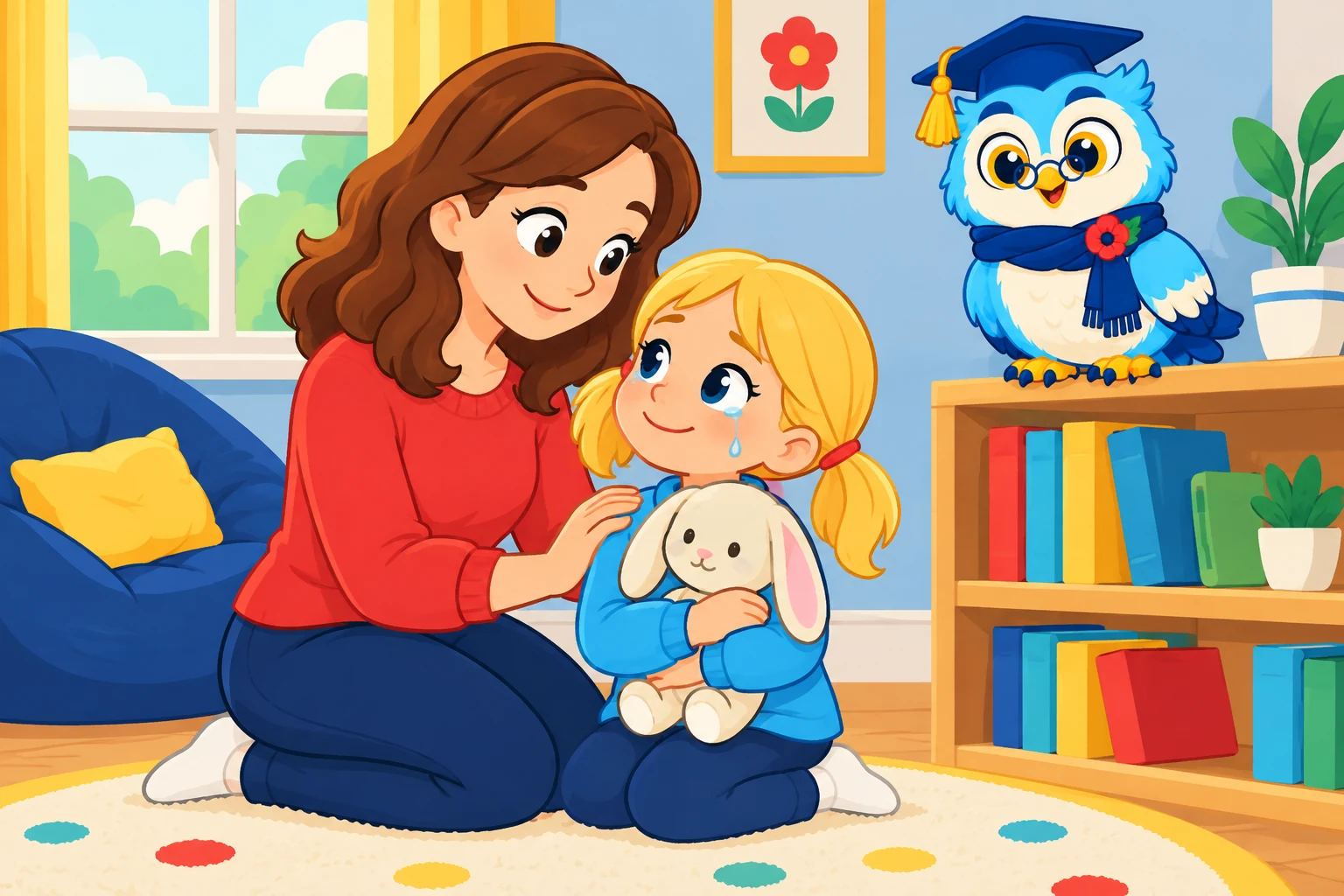
The block tower falls for the third time. Your six-year-old's face crumples, the blocks go flying, and suddenly you're both standing in the middle of a full-size storm over something that took four minutes to build. Ten minutes later, the same child is too nervous to say hello to a new neighbor.
Big feelings and shaky confidence are two sides of the same coin. A child who knows how to ride out frustration is a child who dares to try the hard thing again. This guide shows you how to help kids handle big feelings in the moment, and how to grow the kind of confidence that lasts, using small, steady habits rather than pep talks.
At a glance
- Big feelings are normal, and the goal is managing them, not making them disappear.
- Naming a feeling out loud helps calm the brain, for kids and grown-ups alike.
- Real confidence comes from doing hard things, not from hearing "you're amazing."
- Stay calm yourself first; kids borrow your steadiness before they build their own.
Why it matters
Feelings come with a built-in alarm system. Researchers at the University of California, Los Angeles scanned the brains of people looking at upsetting pictures and found that simply putting the feeling into words, like "angry" or "scared," quieted the brain's alarm center, the amygdala. That's why "Name it to tame it" is more than a catchy phrase. Words really do help the thinking brain get back in charge.
Confidence works in a similar, practical way. Pediatricians at the American Academy of Pediatrics describe confidence as growing out of competence: children believe in themselves after they've actually handled real situations. Empty praise doesn't build it. Doing, struggling a little, and succeeding does.
And this isn't a rare issue. According to the Centers for Disease Control and Prevention, about 11% of U.S. children ages 3 to 17 had a current, diagnosed anxiety condition in 2023 to 2024. Most kids won't need a diagnosis, but every child benefits from learning what to do when a feeling gets big.
7 ways to help kids handle big feelings
1. Get calm before you get talking
In the middle of a meltdown, your child's thinking brain is offline. Lectures bounce right off. What reaches them is your tone, your face and your breathing. Kneel down, lower your voice, slow your own breath and say very little. Once your child is calmer, you can talk about what happened.
Try this: Pick a family "calm phrase," like "I'm here. We'll figure it out." Use the same words every time so they become a signal of safety.
2. Name the feeling, without judging it
Children often don't have the words for what's happening inside them, so it comes out as kicking, crying or slamming doors. When you name the feeling, you hand them the word and show it's allowed. Feelings are always OK; some actions aren't. "You're really disappointed the tower fell. It's OK to feel mad. It's not OK to throw blocks."
Try this: Go beyond happy, sad and mad. Add words like frustrated, nervous, embarrassed, left out and proud, and use them about your own day at dinner.
3. Teach one calm-down tool when things are quiet
Nobody learns to swim during a storm. Practice calming tools on an ordinary afternoon, so they're ready when a big feeling shows up. Slow breathing is a great starter because it can be done anywhere, from the classroom to the car.
Try this: Practice "birthday cake breathing." Smell the cake slowly through your nose, then blow out the candles slowly through your mouth. Do five candles together.
Professor Poppy's tip: Make a "calm corner" with a soft pillow, a favorite book and a picture card of your breathing trick. It's not a time-out spot; it's a place your child can choose to go to reset.
4. Praise the effort and the strategy
A classic set of studies at Columbia University found that fifth graders praised for being smart were more likely to avoid harder puzzles afterward, while those praised for their effort were more willing to take on a challenge. Specific praise about what your child did teaches them that ability grows with practice.
Try this: Swap "You're so smart" for "You kept going even when that was tricky," or "I noticed you took a breath before you tried again."
5. Let them do hard things (and stay nearby)
It's tempting to swoop in and fix everything. But confidence comes from small wins your child earns on their own: ordering at a counter, calling grandma, carrying the groceries in. Stay close, offer a hint if they're truly stuck, then step back and let them finish.
Try this: Each week, hand over one "brave job" that's just a little beyond their comfort zone, and let them tell the family how it went.
6. Treat mistakes as information
Kids who fear mistakes stop trying new things. Kids who see mistakes as clues keep going. Talk openly about your own slip-ups and what you learned. It shows your child that grown-ups get things wrong too, and that the story doesn't end there.
Try this: At dinner, play "Best Mistake of the Day." Everyone shares one mistake and one thing it taught them.
7. Read and talk about characters who feel big things
Stories let children watch someone else feel nervous, left out or furious, from a safe distance. Afterward, it's much easier to talk about their own feelings, because you can start with the character's.
Try this: Pause a story at a tense moment and ask, "How do you think she feels right now? What would you tell her?"
Age by age
| Age | What it looks like | How to help |
|---|---|---|
| 3 to 5 | Big, fast feelings; tantrums when tired, hungry or told no; few words for emotions. | Name feelings for them, keep routines steady, and practice one simple breathing game. |
| 6 to 8 | Worries about school, friends and fairness; may give up quickly when something is hard. | Teach feeling words, praise effort, and hand over small brave jobs. |
| 9 to 12 | Hides feelings to fit in; sensitive to embarrassment; starts comparing themselves to others. | Talk side by side (in the car, on a walk), share your own mistakes, and help them solve problems step by step. |
Try it tonight: the Feelings Weather Report
Time: about 10 minutes. You'll need: paper, crayons and a little imagination.
- Explain that feelings are like weather: they come, they change and they pass.
- Each person draws today's "inside weather": sunshine, clouds, rain, a thunderstorm or a rainbow.
- Take turns sharing: "My weather was rainy at lunch because..." Grown-ups go first to show it's safe.
- End with one "weather tool" for tomorrow, like "If a storm starts, I'll do five birthday candles."
For more calm, giggly time together, play our free kids' games or grab a printable from the bonus page.
Professor Poppy's tip: You don't have to get it right every time. When you lose your cool, say so and repair it: "I yelled, and I'm sorry. Let's try again." That repair teaches more than a perfect day ever could.
Books that help
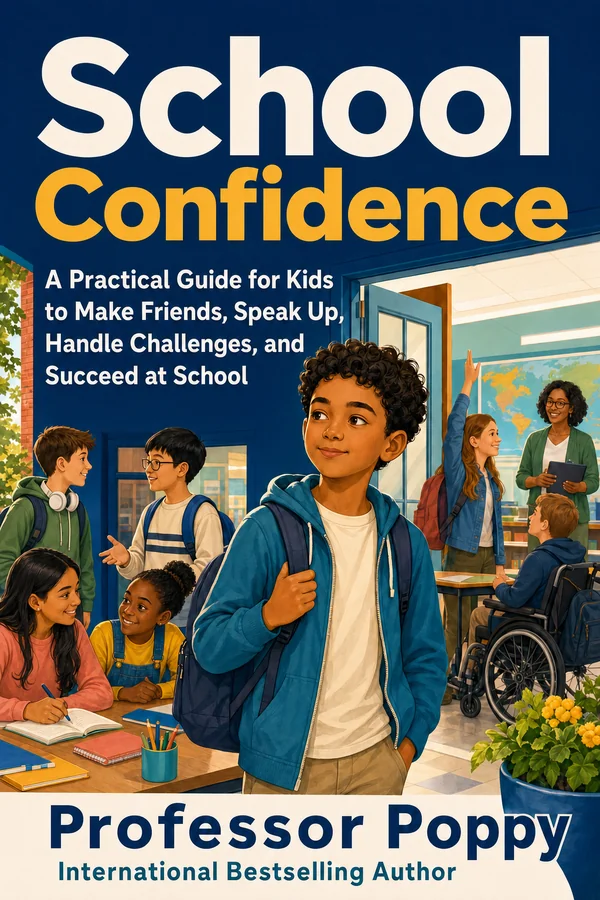
- School Confidence walks kids through real school moments, like asking for help, handling mistakes and speaking up, with clear next steps and useful words instead of "just be confident."
- Never Give Up: Inspiring Soccer Stories follows everyday kids facing real fears, from the nervous new kid to the goalie who let a goal in, with talk-about-it questions that turn "I can't" into "I did it."
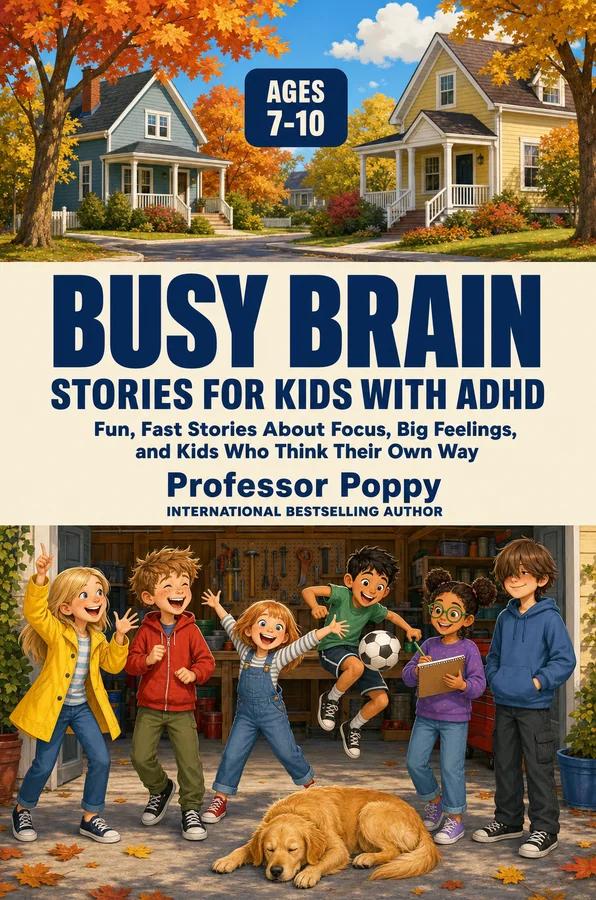
- Busy Brain Stories offers short, fast stories about focus and big feelings, each with a real trick busy-brained kids can try.
Quick answers
Is it normal for my child to have meltdowns at age 7 or 8?
Yes, especially when they're tired, hungry or overwhelmed after a long school day. Meltdowns usually get shorter and less frequent as children learn words and tools for their feelings. If they're getting more intense or happening most days, mention it to your pediatrician.
How do I build my child's confidence without overpraising?
Praise what your child did, not who they are: the effort, the strategy, the kindness. Then give them real chances to succeed at things that matter, like small household jobs or speaking up for themselves. Confidence grows from those earned wins.
When should I worry about my child's anxiety or anger?
Talk to your child's doctor if feelings regularly get in the way of school, sleep, friendships or family life, or if your child seems stuck in worry or anger for weeks. Getting help early is a sign of good parenting, not a failure, and many families find a few simple strategies make a big difference.
Sources
- Centers for Disease Control and Prevention: Data and Statistics on Children's Mental Health
- American Academy of Pediatrics (HealthyChildren.org): Building Resilience in Children
- University of California, Los Angeles: Putting Feelings Into Words (affect labeling research)
- Columbia University: Praise for Intelligence Can Undermine Children's Motivation and Performance