Life skills
Life Skills for Kids by Age: A Parent's Simple Guide
Life skills for kids by age, from ages 4 to the teen years, plus simple ways to teach chores, money and independence without nagging.
The Professor Poppy team · October 9, 2026 · 7 min read
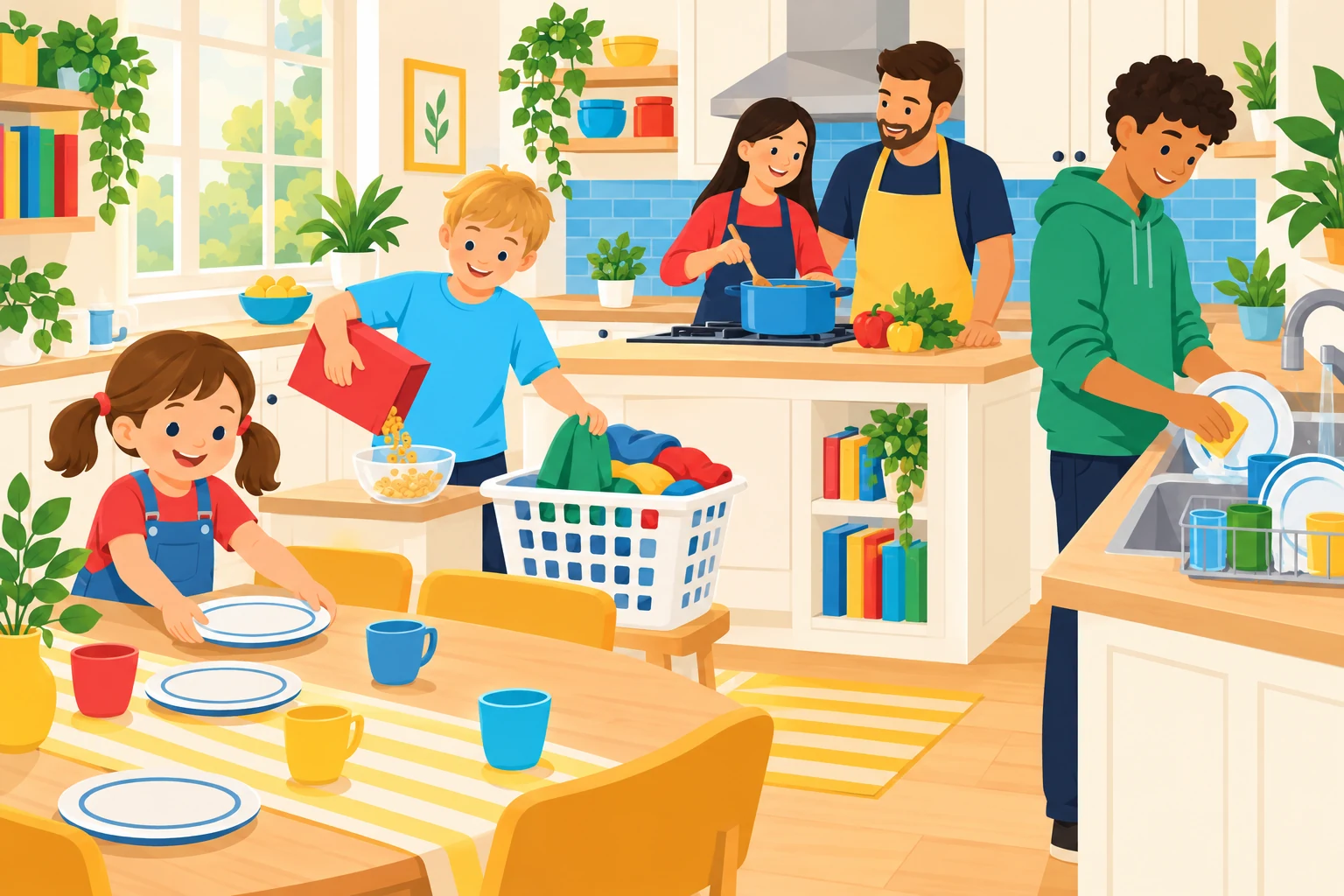
You ask your ten-year-old to start a load of laundry and get a blank stare. Then it dawns on you: nobody ever actually showed them how. Most of us fully intend to teach the everyday stuff. It just gets squeezed out between school runs, homework and getting dinner on the table.
This guide to life skills for kids by age walks through what children can usually handle at each stage, from preschool to the teen years, and how to teach it without turning every evening into a nagging match.
At a glance
- Everyday jobs build responsibility and confidence, not just a tidier home.
- Kids can do more than we expect when a task fits their age and we teach it step by step.
- Clear, specific jobs tied to daily routines cut the nagging way down.
- Praise the effort, add one new skill at a time, and let small mistakes do some teaching.
Why it matters
Pediatricians at the American Academy of Pediatrics point out that helping keep the home running smoothly boosts a child's self-esteem, and that children need real duties within the family to learn responsibility. A child who can pour their own cereal, pack their own bag or fix a simple meal feels capable, and that feeling spills into school and friendships.
There's brain science behind it, too. Researchers at the Center on the Developing Child at Harvard University describe a set of skills called executive function: holding information in mind, controlling impulses and switching gears when plans change. These are the skills behind following a recipe, remembering a gym bag and staying calm when a shoelace knots. They keep developing from early childhood all the way through the teen years, and they grow with practice. Ordinary household jobs happen to be perfect practice.
Age by age
Every child is different, so treat these as starting points, not deadlines. If your child is ahead in one area and behind in another, that's completely normal.
| Age | What it looks like | How to help |
|---|---|---|
| 4 to 6 | Puts toys away, drops dirty clothes in the hamper, fills the pet's dish, waters plants, helps set the table, gets dressed, washes hands well. | Use picture charts, one-step jobs and plenty of cheering. Silly games like freeze dance build self-control. |
| 7 to 9 | Makes their bed, sets and clears the table, sweeps, puts away clean laundry and groceries, makes simple snacks, helps cook dinner, packs their own school bag. | Hand over whole routines, not single tasks. Start a small savings goal so money starts to feel real. |
| 10 to 12 | Does and folds laundry, changes bedsheets, runs the dishwasher, cleans the bathroom and kitchen, cooks a simple meal with an adult nearby, keeps a homework calendar. | Teach multi-step jobs carefully once, then step back. Let them manage a small allowance. |
| Teens | Cleans up after cooking, vacuums shared spaces, does yard work, shops for groceries, plans a full meal, budgets money, keeps track of their own schedule and keys, may take a part-time job. | Hand over more of the steering wheel and let natural consequences teach where it's safe. |
7 ways to teach life skills without nagging
1. Teach it in four steps
Most nagging starts because we skipped the teaching. Try this rhythm: first, you do the job while your child watches. Next, you do it together. Then they do it while you watch and coach. Finally, they do it alone. It feels slow for a week, and then it saves you months of reminders.
Try this: Pick one job this week, like loading the dishwasher, and walk through one step each evening for four evenings.
2. Say exactly what "done" looks like
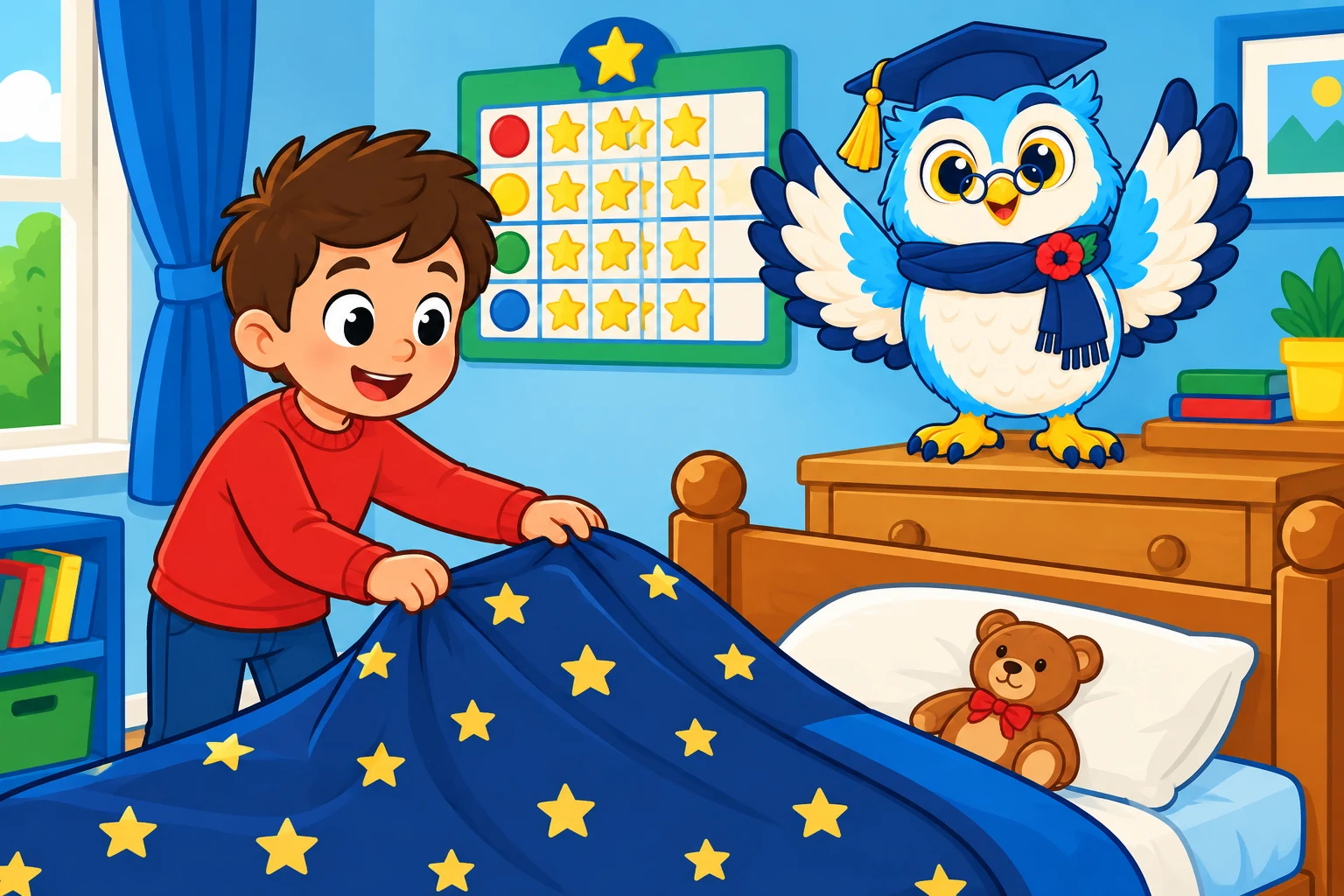
"Clean your room" can mean a dozen different things to a seven-year-old. A clear, short list takes out the guesswork and most of the arguing. A simple chart on the fridge or bedroom door works as a reminder, and kids love checking things off.
Try this: Swap "Clean your room" for "Clothes in the hamper, books on the shelf, toys in the bin."
3. Add one new skill at a time
A long list of new jobs can swamp a child, especially one who hasn't had regular chores before. The AAP suggests introducing one new task at a time. Let one job become automatic before you add the next.
Try this: When a chore has gone a full week without a reminder, celebrate it, then let your child pick the next skill to learn.
4. Attach jobs to things that already happen
When a job is hooked onto part of the day that never changes, the routine does the remembering for you. Doing chores at the same time every day turns them into habits instead of arguments.
Try this: Link each job to an anchor: feed the dog before breakfast, pack the school bag after dinner, clothes in the hamper at bath time.
Professor Poppy's tip: Put the tools where little hands can reach them. A low hook for the backpack and a step stool by the sink do more than a hundred reminders.
5. Praise the effort, not the result
Pediatricians recommend praising the effort a child puts into a task rather than how perfect it turned out. Be specific, and make a big deal when your child does something without being asked. Expect lumpy beds and crooked forks at first. They're proof of trying.
Try this: Say exactly what you noticed: "You put the cups away without me asking. That really helped our whole family."
6. Let small mistakes teach
With older kids and teens, the hardest step is often stepping back. The AAP encourages parents of teens to stop doing things their teen can handle alone, like making their lunch, and to let natural consequences do the teaching when it's safe. A forgotten lunch once is often more memorable than ten reminders.
Try this: Next time your preteen forgets something low-stakes, resist the rescue. Later, talk together about a plan for next time.
7. Hold a five-minute family check-in
A quick weekly chat lets everyone say what's working and what isn't. Kids who help shape the plan are far more willing to follow it, and you're modeling the calm problem-solving you want them to learn.
Try this: Every Sunday, ask two questions: "What went well with jobs this week? What should we change?"
Try it tonight: the "I Can Do It!" ladder
Time: about 15 minutes. You'll need: a sheet of paper, markers and some tape.
- Draw a tall ladder together.
- On the bottom rung, your child writes a skill they've already mastered, like "I can pour my own cereal."
- On the rungs above, add skills they want to learn next, ending with a big dream at the top, like "I can cook dinner for the family."
- Each time they master a rung, they color it in. Tape the ladder to the fridge where everyone can see it.
It turns "Do your chores" into "Look how far you've climbed!" You'll find more printable activities on our bonus downloads page, and some fun brain breaks on our games page.
Professor Poppy's tip: Start where your child is, not where you wish they were. One small skill learned well beats ten half-learned ones.
Books that help
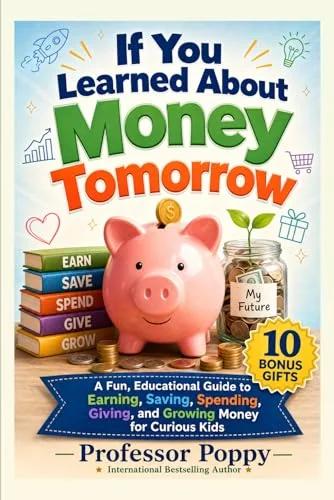
- If You Learned About Money Tomorrow turns earning, saving, spending and giving into an illustrated adventure, a perfect partner for the money skills in the table above.
- What Could You Be? gets curious kids exploring future careers, which makes today's skills feel worth learning.
- Life Skills Guide for Teen Boys covers managing money, cooking real food, fixing things and landing a first job, with full-color illustrations.
Quick answers
At what age should kids start doing chores?
Earlier than many parents think. Preschoolers can put toys away and help set the table, and pediatricians suggest regular chores like making the bed and clearing the table from about age 5. Starting small and early makes helping feel like a normal part of family life.
Should I pay my kids for chores?
Families handle this differently. Pediatricians note that tangible rewards, such as an allowance or stickers tied to finished chores, can help motivate kids. Many families keep everyday "family jobs" unpaid and offer pay for extra tasks, which teaches both responsibility and earning.
What life skills should a 10-year-old know?
By around 10 to 12, many kids can do and fold laundry, change their sheets, help clean the kitchen and bathroom, and cook a simple meal with an adult nearby. They can also plan their homework week and handle a small allowance. If your child struggles with routines or self-care that seem well behind their age, mention it to your pediatrician or their teacher.
Sources
- American Academy of Pediatrics: Age-Appropriate Chores for Children
- American Academy of Pediatrics: Next Stop Adulthood, Tips for Parents
- Center on the Developing Child at Harvard University: Executive Function and Self-Regulation