Activities & printables
Why Drawing Matters for Kids: Creativity and Hand Skills
Why drawing matters for kids, from fine motor skills to memory and creativity, plus easy ways to get every child drawing at home, at any age.
The Professor Poppy team · October 9, 2026 · 7 min read
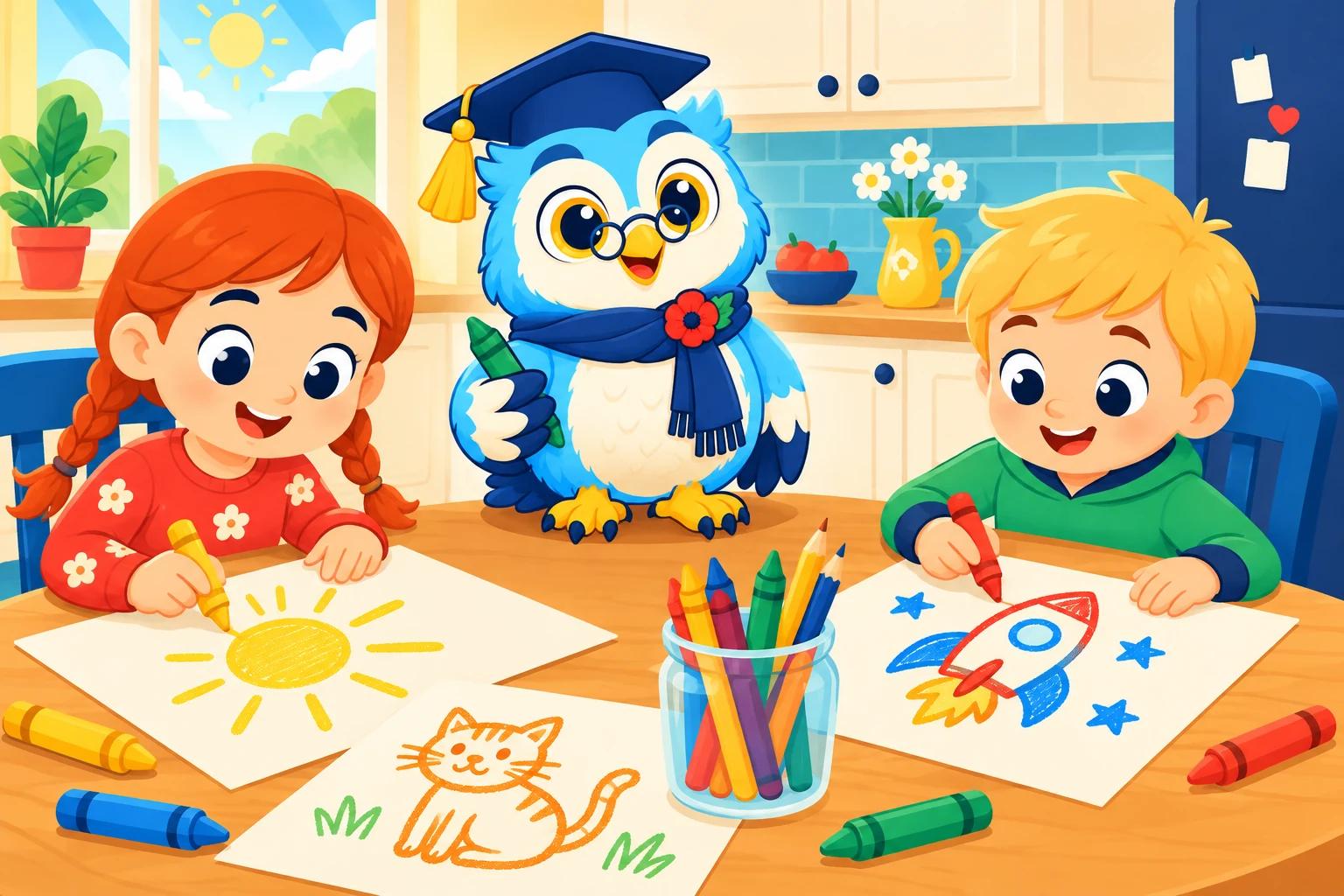
"I can't draw." If you've heard those words from your child, maybe while they stared at a blank page or crumpled up a picture of a horse that looked more like a potato, you're not alone. Somewhere around age seven or eight, lots of kids decide they're "not artists" and quietly stop.
That's a shame, because drawing isn't really about making pretty pictures. It's one of the best all-in-one workouts a growing brain and a growing hand can get. This post explains why drawing matters for kids, what the research says, and simple ways to keep crayons moving at home, even for the child who's sure they can't.
At a glance
- Drawing builds fine motor skills, the small hand movements kids need for writing, buttons and zippers.
- It also helps kids remember, plan, notice details and express feelings they can't yet put into words.
- Talent doesn't matter. The benefits come from the doing, not from how the picture turns out.
- Short, playful drawing sessions beat formal lessons, especially for young kids.
Why it matters
Drawing starts surprisingly early and grows in clear steps. The Centers for Disease Control and Prevention lists scribbling as a typical milestone around 18 months, drawing a circle when shown how around age 3, and drawing a person with three or more body parts around age 4. Each of those steps reflects a hand, an eye and a brain learning to work together.
Those small hand skills matter well beyond art time. A large analysis of several long-term studies of young children, published in the journal Developmental Psychology, found that fine motor skills at the start of kindergarten were a strong predictor of later reading and math achievement, alongside attention and general knowledge. Researchers at Indiana University have also found that when young children practice printing letters by hand, brain areas linked to reading become more active, an effect they didn't see when kids typed or traced the letters.
There's a memory bonus too. Psychologists at the University of Waterloo found that people remembered words much better when they drew them than when they wrote them out, and that the quality of the drawing didn't matter. A wobbly stick figure works just as well as a masterpiece.
6 ways to grow creativity and fine motor skills through drawing
1. Keep supplies where kids can reach them
Children draw more when it's easy. A basket of crayons, pencils, markers and scrap paper on a low shelf invites spontaneous drawing in a way a craft cupboard never will. For toddlers and preschoolers, chunky crayons are easier to grip; older kids enjoy colored pencils and fine markers for detail.
Try this: Set up a "drawing station" by the kitchen table with a jar of crayons and a stack of plain paper, and refill it every Sunday.
2. Talk about the picture, not the talent
"That's beautiful!" ends the conversation. Curious questions start one, and they show your child that their ideas matter more than perfect lines. Describing what you notice also builds vocabulary and storytelling.
Try this: Ask "Tell me about your drawing" or "What's happening here?" and then point out one thing you see: "You used lots of blue in the sky."
3. Break big things into simple shapes
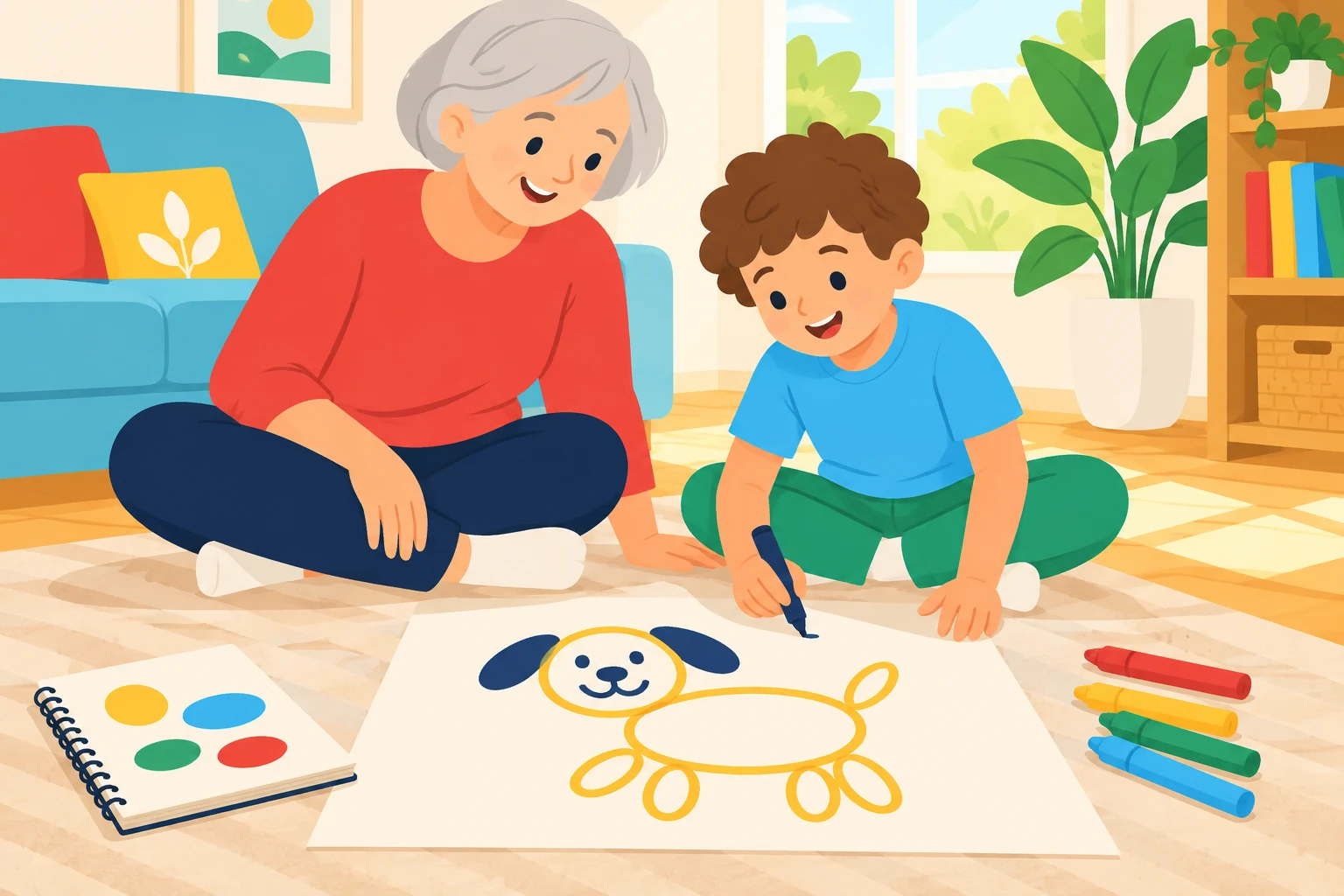
Many kids give up because they try to draw a whole dog at once. Showing them that a dog is just a circle, an oval and a few smaller ovals turns a scary job into a puzzle they can solve. It also builds planning and spatial thinking.
Try this: Draw side by side. You make one shape, your child copies it, then you add the next shape together until a cat, car or rocket appears.
Professor Poppy's tip: Draw with your child, and let your own drawings be a little silly. When kids see a grown-up happily drawing a lopsided giraffe, "I can't draw" loses its power.
4. Mix in hand-strengthening play
Fine motor skills don't only grow at the drawing table. Play dough, building bricks, stringing beads, cutting with child-safe scissors and peeling stickers all strengthen the small muscles of the hand and fingers. Stronger hands mean more comfortable drawing and, later, writing.
Try this: Before drawing, do a two-minute "hand warm-up": squeeze a ball of play dough, roll it into a snake, then pinch it into tiny pieces.
5. Use drawing to remember and to learn
Since drawing helps memory, it's a great study tool. Kids can sketch spelling words, science facts or the steps of a story. It's also a gentle way to share feelings; a child who can't explain a bad day can often draw it.
Try this: After a book or a trip, ask your child to draw "the best part" and tell you about it. You'll be surprised how much they remember.
6. Give creative prompts, not just coloring pages
Coloring pages are fun and good for control, but open prompts stretch imagination further. Silly "what if" questions are perfect starters, because there's no right answer to copy.
Try this: Try a prompt like "Draw a pet that's half animal, half vehicle" or "Draw your house if it were built underwater."
Age by age
| Age | What it looks like | How to help |
|---|---|---|
| 1 to 2 | Scribbles with a whole-fist grip, enjoys making marks more than pictures. | Offer chunky crayons and big paper taped to the table, and cheer for every mark. |
| 3 to 4 | Draws circles and lines, then simple people with a head and a few body parts; names drawings after they finish. | Ask about their pictures, play with play dough, and show how shapes become things. |
| 5 to 7 | Draws people, houses and animals with more detail; starts writing letters and words on drawings. | Draw together step by step, add labels to pictures, and keep supplies handy. |
| 8 and up | Wants drawings to look "real"; may get frustrated and give up. | Teach shape-by-shape methods, try comics and doodle challenges, and praise practice. |
Try it tonight: the Shape Monster game
Time: about 15 minutes. You'll need: paper, a pencil and crayons for each person.
- Everyone draws one big random shape, like a wobbly circle, a triangle or a zigzag.
- Swap papers.
- Turn the shape you received into a monster, animal or machine by adding eyes, legs, wings or wheels.
- Give your creation a name and one silly superpower, then share it with the family.
Want more creative fun? Try our free kids' games, or pick up printable activities on the bonus page.
Professor Poppy's tip: Keep a "drawing journal" for each child and date the first page. Flip back in six months together. Seeing how much they've grown is the best confidence boost there is.
Books that help
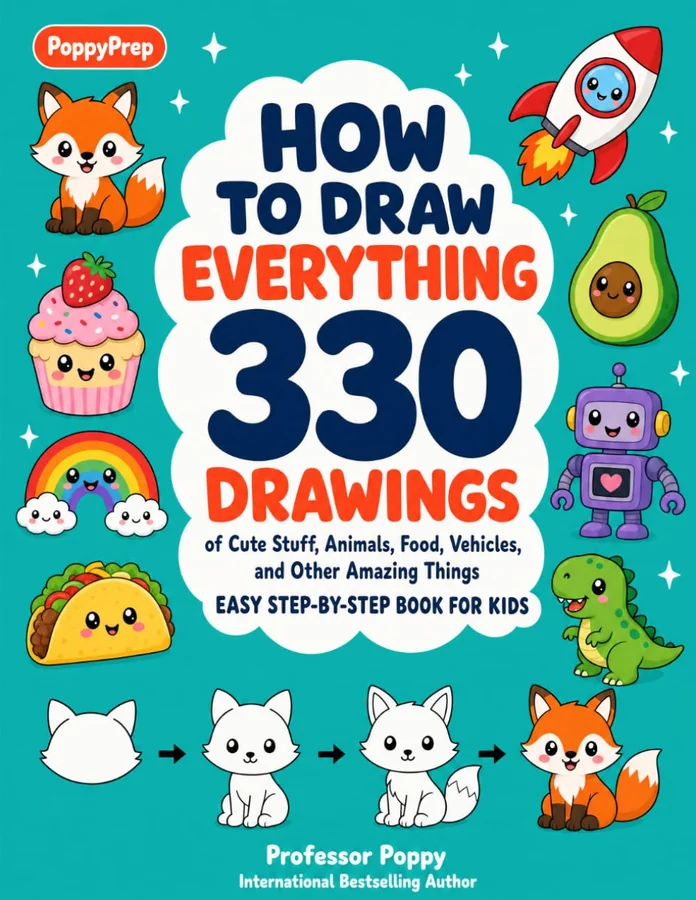
- PoppyPrep How to Draw Everything turns cute animals, treats, toys and vehicles into easy steps, with a "Your Turn" box beside each drawing so kids practice right in the book.
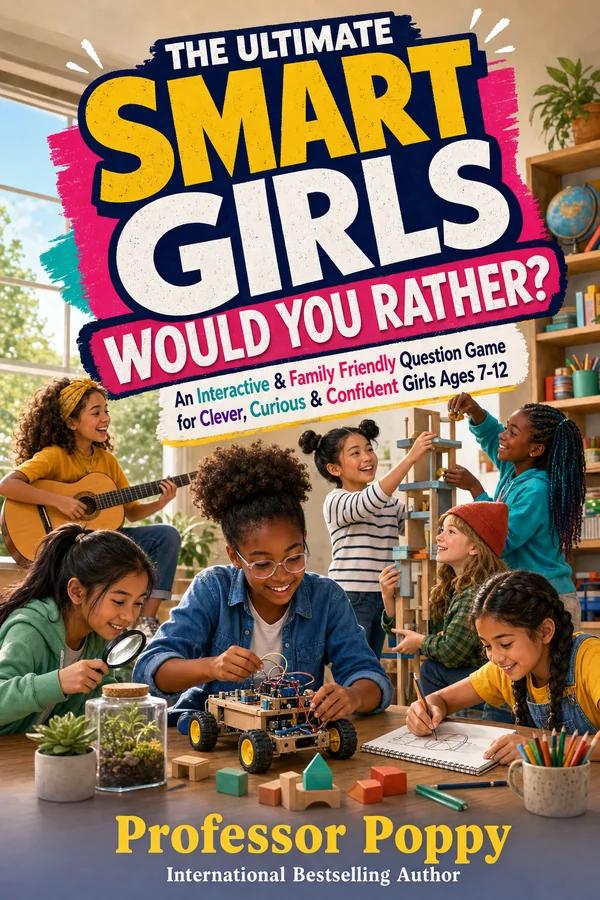
- The Ultimate Smart Girls Would You Rather? is packed with imaginative choices that make wonderful drawing prompts.
- The Ultimate Smart Boys Would You Rather Game Book sparks the same kind of creative, silly thinking, perfect for a "draw your answer" challenge.
Quick answers
At what age should a child be able to draw a person?
According to the CDC's milestone checklists, many children draw a person with three or more body parts around age 4. Every child develops at their own pace, so if you have concerns about your child's hand skills, mention them to your pediatrician.
Does drawing really help with handwriting?
Drawing builds the same small-muscle control, hand-eye coordination and pencil grip that handwriting needs. Kids who draw a lot often find it easier to form letters. It's a great warm-up, though children still need direct practice writing letters too.
My child says they can't draw. What should I do?
Focus on fun and effort rather than results. Draw together, break pictures into simple shapes, and share your own imperfect drawings. Step-by-step drawing books can help a lot, because each small success shows kids that drawing is a skill they can learn.
Sources
- Centers for Disease Control and Prevention: Learn the Signs. Act Early. Milestone Checklists
- Indiana University: Research on handwriting and children's brain development
- University of Waterloo: The drawing effect on memory