Learning at home
Career Exploration for Kids: A Parent's Guide, Ages 4 to 14
Career exploration for kids made easy. Age-by-age activities, everyday career spotting, a career of the week plan, questions to ask and a checklist.
The Professor Poppy team · October 9, 2026 · 16 min read
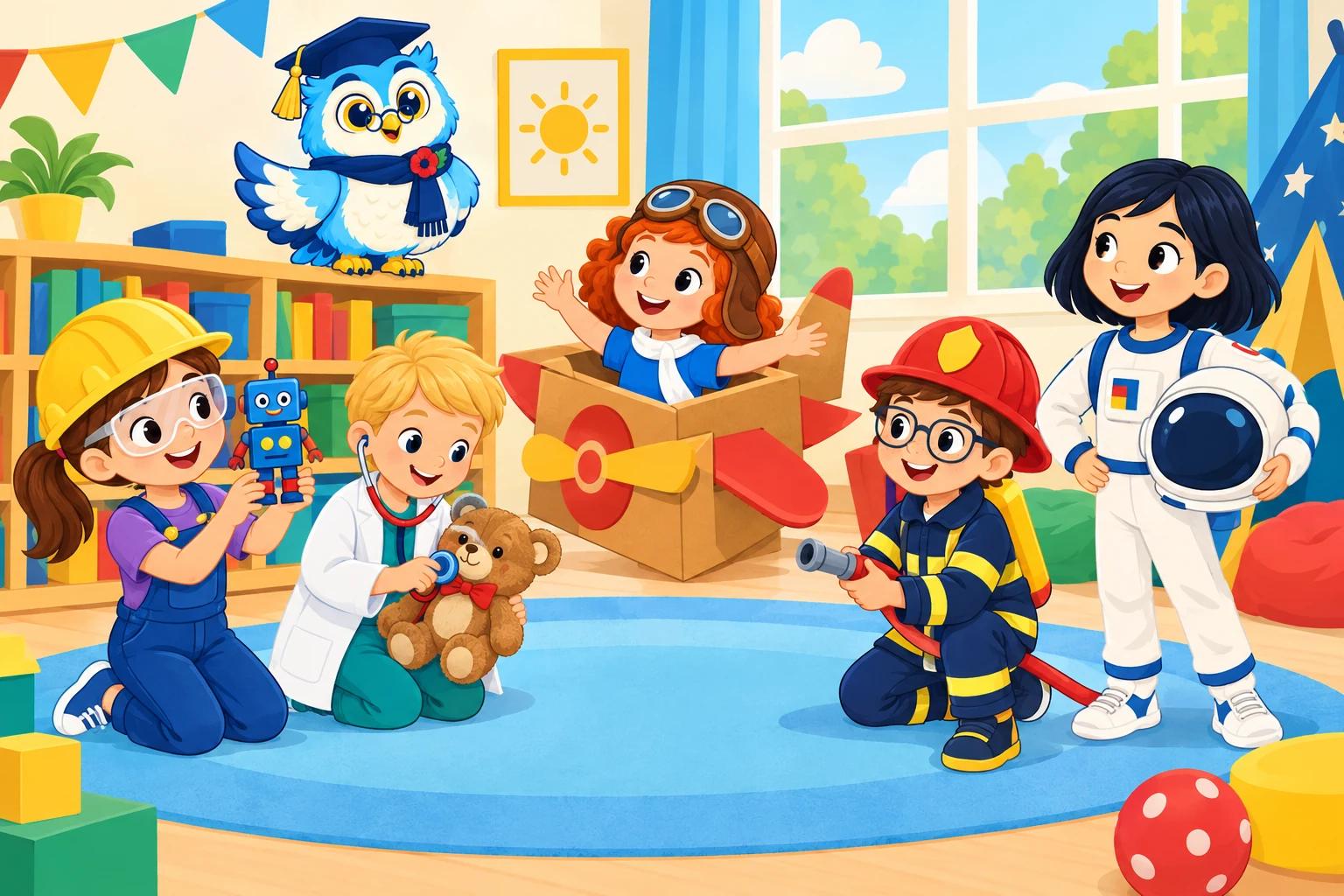
Ask a room full of kids what they want to be when they grow up and you'll hear a familiar chorus: doctor, teacher, vet, firefighter, a sports star or two. Ask a ten-year-old what a sound engineer, a wildlife biologist or a robotics technician does and you'll often get a blank stare. That's not because kids lack imagination. It's because nobody has shown them those doors yet.
That's what career exploration for kids is really about. Not choosing a job at seven. Not pressure. It's about widening the world, one curious conversation at a time, so that when your child is old enough to choose, they're choosing from a big, bright menu instead of a short list of jobs they happened to see on TV.
This guide is our flagship for families. You'll find why early exposure matters, what career curiosity looks like at every age from 4 to 14, how to spot careers in everyday life, a simple "career of the week" plan, the best questions to ask, and a checklist you can stick on the fridge.
At a glance
- Kids can only dream about jobs they've heard of, so the goal is to widen the list, not narrow it.
- Ideas about "who does which job" form early, often by the first years of grade school.
- Pretend play, real conversations and everyday errands are the best career classrooms.
- Keep it light: celebrate curiosity and effort, never ranking jobs or pushing one path.
Why it matters
Children's career dreams are surprisingly narrow, and they've been getting narrower. When the OECD asked hundreds of thousands of 15-year-olds in 41 countries about the job they expected to have at age 30, nearly half named one of just ten popular jobs, and that concentration was higher than when the same question was first asked in 2000. The report, called "Dream Jobs?", found that many teens knew little about newer kinds of work, and that kids from disadvantaged backgrounds were more likely to aim low even when they did well in school.
The pattern starts much earlier than the teen years. In a project called "Drawing the Future", the UK education charity Education and Employers, working with the UCL Institute of Education, asked children ages 7 to 11 to draw the job they wanted. Thousands of drawings came in, and 36 percent of the children based their dream job on someone they personally knew. Among kids who didn't know anyone in their chosen job, TV, film and radio were the biggest influence. Fewer than 1 percent had heard about a job from a visitor to their school. The researchers also found that children's choices at age 7 looked a lot like the choices of 17-year-olds.
Put simply: kids aim for the jobs they can see. The good news is that parents are one of the biggest windows children have. The American School Counselor Association treats career development as one of the three core areas school counselors cover, right alongside academic and social-emotional growth, and it starts in the early grades. Your kitchen table can be part of that work too.
How career curiosity grows, age by age
Career psychologist Linda Gottfredson described a pattern many parents will recognize. Young children first notice jobs by what's big and powerful (fire trucks, rockets, superheroes). Around ages 6 to 8, they start sorting jobs by whether they seem to be "for boys" or "for girls." From about 9 to 13, they begin judging jobs by status and by whether they feel "smart enough." Only in the teen years do they really ask, "What fits the person I am?"
The catch is that kids often cross jobs off their list along the way, sometimes for reasons that have nothing to do with their talents. Our job is to keep the doors open at every stage.
| Age | What it looks like | How to help |
|---|---|---|
| 4 to 5 | Loves dress-up and big, exciting jobs; changes their mind daily; knows familiar helpers. | Pretend play, props, picture books and pointing out helpers on outings. |
| 6 to 8 | Curious about what people really do all day; starts noticing who does which job. | Ask-a-helper interviews, a career of the week, and showing every kind of person in every kind of job. |
| 9 to 11 | Links jobs to interests; asks about money, school and "am I good at this?" | Explore jobs in depth, connect school subjects to real work, build a "dream tree" of options. |
| 12 to 14 | Thinks about identity, values and skills; can research on their own. | Job shadowing, real projects, talking about training paths and the many routes into one field. |
Preschool (about ages 4 to 5): play is the classroom
At this age, career exploration is pure play. Pretend games let children try on grown-up roles, practice language and take turns being the expert. Pediatricians at the American Academy of Pediatrics describe this kind of imaginative play as real brain building, helping kids plan, cooperate and manage feelings.
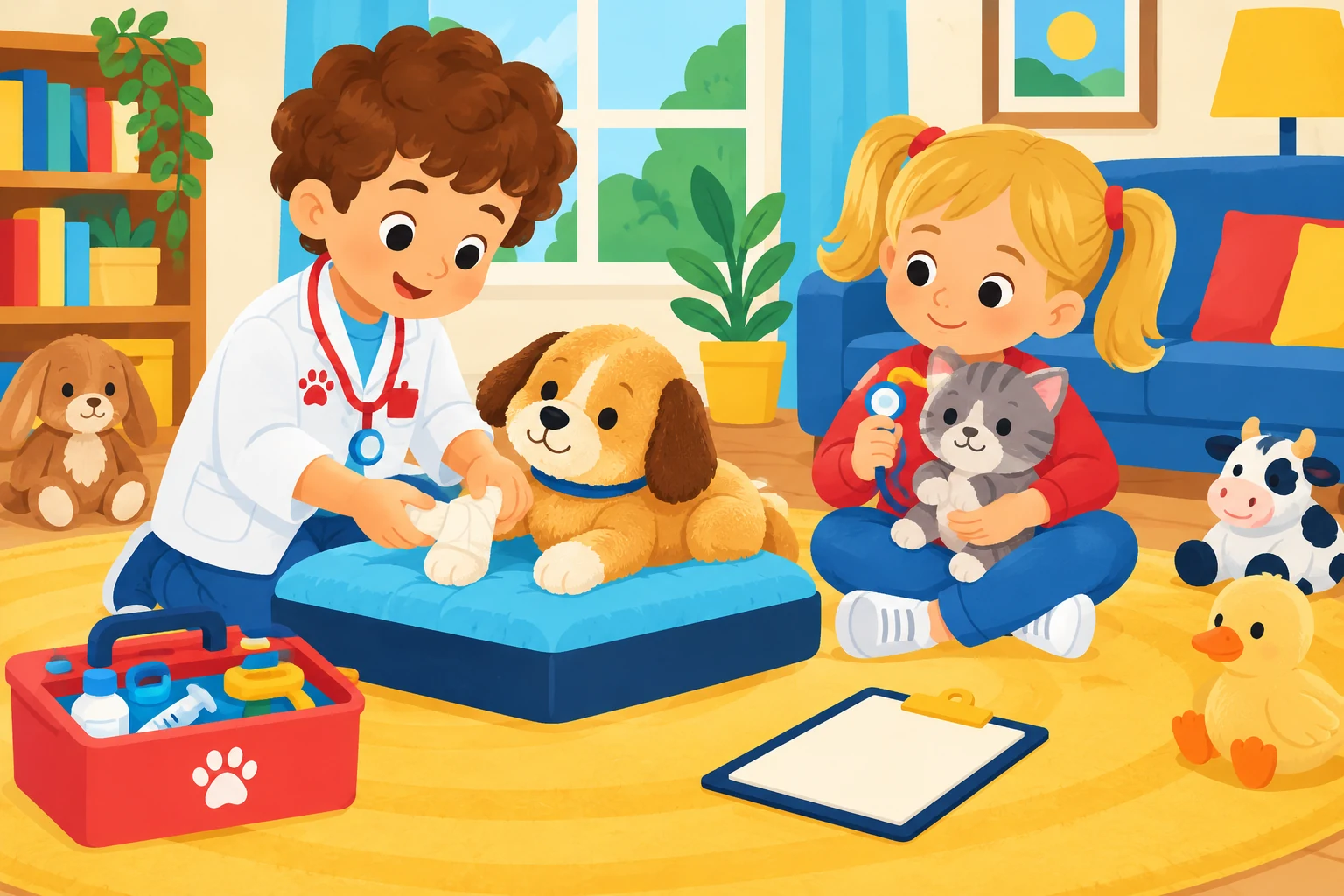
- Set up a pretend vet clinic. A shoebox kennel, a toy stethoscope and a row of stuffed animals make a whole afternoon. If there's a big sibling ages 7 and up, let them be the head vet with You Are the Veterinarian as the clinic handbook.
- Make a "job box." Fill it with simple props: a notepad, an old phone, a scarf, a measuring tape, a toy hard hat. Your child pulls out an item and invents the job that goes with it.
- Play "Who helps us?" Before bed, name one helper you saw today: the bus driver, the librarian, the nurse at the clinic.
Try this: Build a cardboard-box airplane and take turns being the pilot and the passengers. Ask, "Captain, what do you check before we fly?"
Early elementary (about ages 6 to 8): meet the real helpers
Kids this age want the real details. What does a firefighter do when there's no fire? How does a pilot know where to go? It's also the age when children start sorting jobs by gender, so the people they meet really matter.
- Hold an ask-a-helper interview. Grandparents, neighbors and family friends usually love talking about their work. Help your child write three questions and let them play reporter.
- Run a mini career day at home. Each family member dresses as a job and gives a one-minute "what I do" speech. Little firefighters can borrow ideas from If You Were a Firefighter, and young flyers from If You Were a Pilot.
- Play teacher. Let your child teach you something they learned this week, complete with a "lesson plan." It's a fun way into If You Were a Teacher.
Try this: On a walk, count how many different jobs you can spot in ten minutes. Keep a running family record.
Upper elementary (about ages 9 to 11): connect interests to many paths
This is the sweet spot for big career books and deeper questions. Kids can now link what they love to real work, and they start worrying about whether they're "smart enough." Praise effort and curiosity loudly here.
- Draw a dream tree. Write your child's favorite thing on the trunk ("animals," "building," "video games," "helping people") and add a branch for every job that uses it. One love of animals can grow into a vet, a zookeeper, a park ranger, a marine biologist or a pet nutritionist.
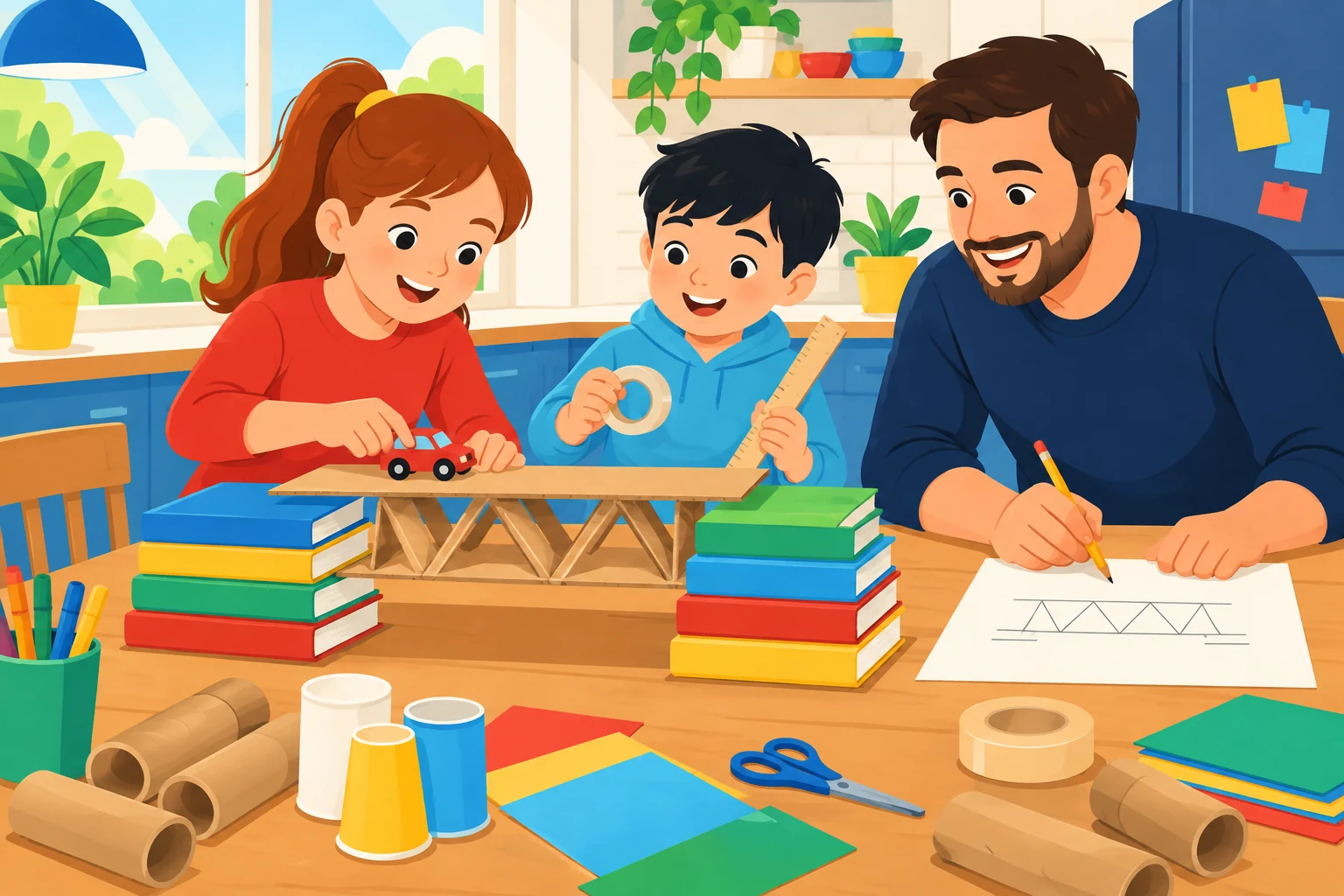
- Do a real mini project. Build a bridge from cardboard and test it with toy cars, then talk about what engineers do all day with You Are the Engineer. Kids who love gadgets can level up to You Are the Robotics Engineer.
- Map the subjects. Ask, "Which grown-up jobs use math? Which use writing? Which use both?" Kids are often amazed that doctors write every day and artists use geometry.
Try this: Pick one job, and together find out three things: what a typical day looks like, what training it takes, and what problem it solves for people.
Middle school (about ages 12 to 14): explore who they are
Now kids are asking, "What fits me?" They can research careers on their own, compare training paths and think about values like helping others, creating things or working outdoors.
- Look things up together. The U.S. Bureau of Labor Statistics publishes the Occupational Outlook Handbook, a free guide to hundreds of jobs with what each worker does, the training needed, typical pay and the job outlook. Its student section even groups careers by interests like building and fixing things, nature, healthcare and transportation.
- Arrange a job shadow. Even an hour watching a relative or family friend at work makes a career feel real.
- Talk about routes, not just destinations. Most fields have many doors in: college, apprenticeships, the military, community college, starting a business, or switching careers later.
Try this: Ask your middle schooler to "interview" you about your own path, including the jobs you had before this one and anything you'd do differently.
Professor Poppy's tip: Swap "What do you want to be when you grow up?" for "What problems would you love to solve?" It invites big, creative answers and takes the pressure off picking just one job.
Who can be an engineer? Fighting career stereotypes early
Ask young kids to draw a scientist and you learn a lot. Researchers at Northwestern University pooled five decades of "Draw-A-Scientist" studies with more than 20,000 American children. In the earliest study, from the 1960s and 1970s, fewer than 1 percent of children drew a woman. In later decades, about 28 percent did. Here's the striking part: around age 5, children drew roughly equal numbers of male and female scientists, but drawings of men rose sharply through elementary and middle school.
A study by researchers at the University of Illinois, New York University and Princeton University found something similar about "brilliance." By age 6, girls were less likely than boys to believe people of their own gender were "really, really smart," and they began avoiding games described as being for very smart kids. Five-year-olds showed no gap. When the same game was described as being for kids who try really hard, the difference faded.
So the window is early, and small choices count:
- Mix it up on purpose. Show girls building, coding and flying planes. Show boys teaching, nursing and caring for animals. Picture books, shows and the helpers you point out all send a message.
- Watch your words. Say "firefighter" and "police officer," not "fireman" or "policeman." When you read about a job, ask, "Could a girl do this? Could a boy?" and let your child answer.
- Praise effort, not genius. "You kept trying different designs until the bridge held!" builds the belief that skills grow with practice.
- Meet real people. A neighbor who is a female engineer or a male nurse is worth a hundred speeches.
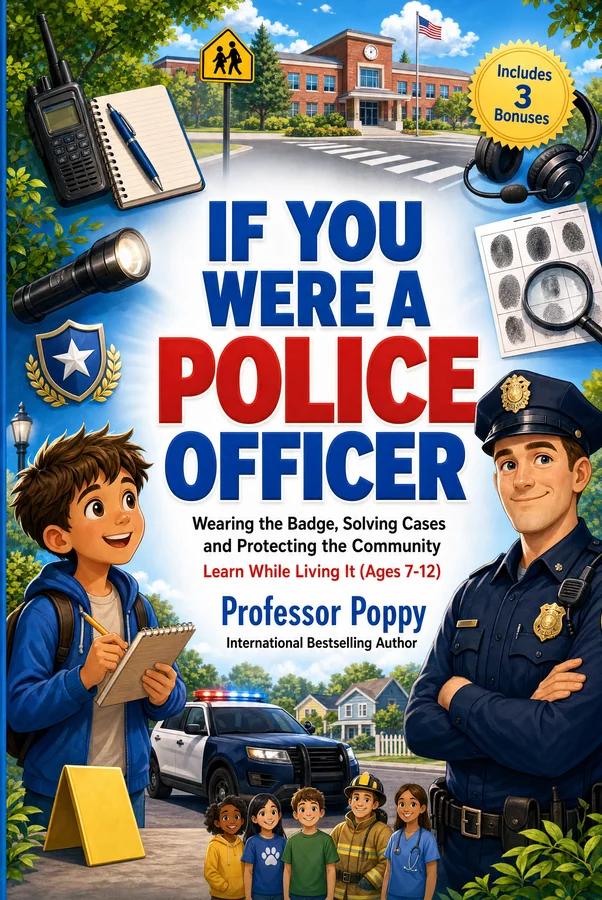
Try this: Read If You Were a Police Officer or You Are the Robotics Engineer with your child, then ask them to draw themselves doing that job. Every child, every job.
Career spotting: turn everyday life into a career tour
You don't need field trips or special programs. Every errand is full of jobs if you look for them, and the conversation takes seconds.

At the grocery store
Point out the jobs you can see (cashier, baker, butcher, produce manager, stocker) and then the ones you can't: the farmer who grew the apples, the truck driver who brought them, the food scientist who tested the yogurt, the designer who made the cereal box. Ask, "How many people helped get this banana to our cart?"
At the doctor or dentist
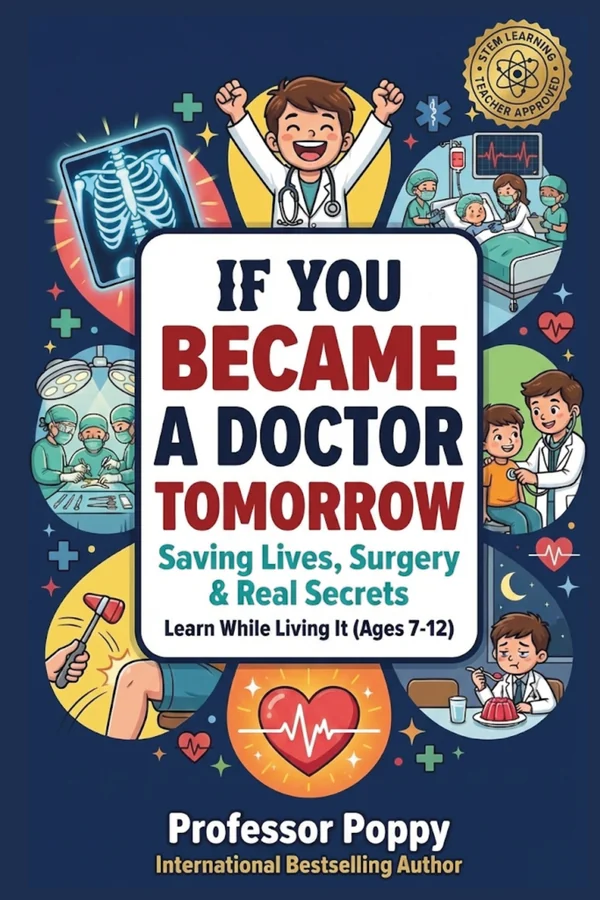
Children often meet several health workers in one visit: the receptionist, the nurse, the doctor, the dental hygienist, the pharmacist. Afterward, ask which job looked most interesting and why. Kids curious about medicine will love imagining a whole day on the job with If You Became a Doctor Tomorrow.
At the airport
An airport is a career city: pilots, flight attendants, mechanics, baggage handlers, air traffic controllers, security officers, weather forecasters, chefs and cleaners all work together to get one plane in the air. Watch the ground crew from the window and guess what each person's job is.
Around the neighborhood
The mail carrier, the crossing guard, the librarian, the construction crew, the firefighters at the station open house: every one of them is a career story. Even watching the night sky can spark a chat about astronauts and the many people on the ground who help them, a perfect lead-in to If You Went to Space Tomorrow.
On screens
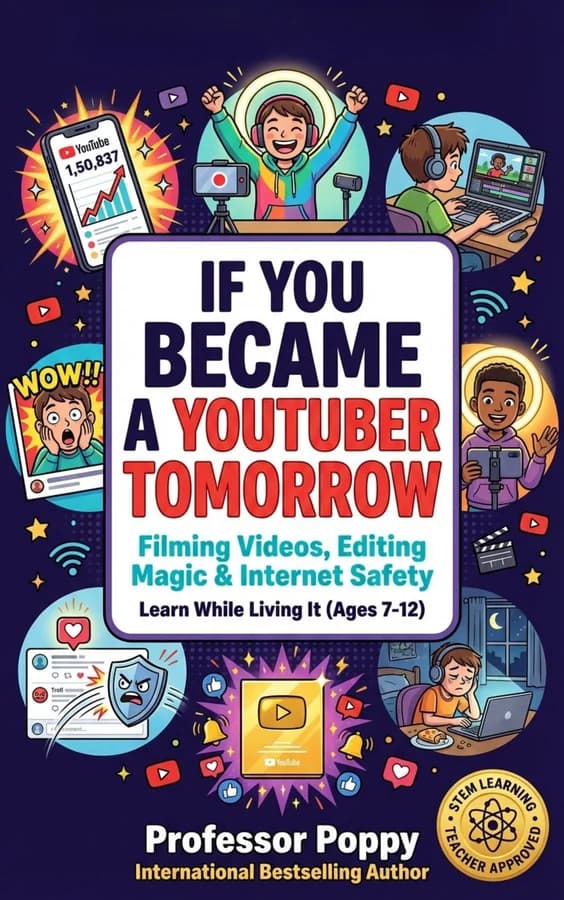
When your child watches videos, flip the question around: "Who made this?" Behind every video there's planning, filming, editing, music and staying safe online. Kids who dream of becoming an online video creator can see how much real skill it takes in If You Became a YouTuber Tomorrow.
Professor Poppy's tip: For every job your child can see, name one they can't. The baker is easy to spot. The wheat farmer, the truck driver and the oven engineer are hiding just behind the bread.
A family "career of the week" plan
A career of the week takes about 10 minutes a day and turns curiosity into a habit. Pick a job together on the weekend (let kids take turns choosing), then follow this rhythm:
- Monday: Meet it. Read about the job together. Our career books make a great weekly pick.
- Tuesday: Spot it. Look for the job, or its tools, in real life, in a book or in a show.
- Wednesday: Ask it. Call or video chat with someone who does the job, or a related one. No contact? Write down three questions to ask someday.
- Thursday: Try it. Do a mini task: plan a "flight route" on a map, design a bridge, care for a stuffed patient, teach a lesson to the family.
- Friday: Play it. Dress up, act it out at dinner, or play a guessing game.
- Weekend: Reflect. Ask, "What surprised you? What would be the best part? The hardest part?" Add the job to a family "careers we've explored" poster.
Try this: Make an interest wheel from a paper plate with sections like animals, building, helping people, space, art, food and machines. Spin it on Sunday to pick next week's career.
Questions to ask kids about careers
Good questions do more than any lecture. Pick one or two at dinner, in the car or at bedtime.
For younger kids (4 to 8)
- Who helped us today? What did they do?
- If you could do any job for one day, what would it be?
- What tools would you need for that job?
- What do you think is the most fun part? The trickiest part?
For older kids (9 to 14)
- What problems in the world would you like to fix?
- What do you do that makes you lose track of time?
- What are you better at now than you were last year? How did you get better?
- Which school subjects do you think that job uses?
- Would you rather work with people, animals, ideas, machines or your hands?
- If that job disappeared, what other jobs use the same skills?
Career explorer checklist
Print this or screenshot it, and check off a few each month. There's no finish line, just a growing world.
Play and imagine
- Set up a pretend workplace (clinic, cockpit, classroom, fire station)
- Dress up as a job and explain what you do
- Build or design something real (a bridge, a robot, a rocket)
Notice and ask
- Spot jobs on a grocery trip, a doctor visit or an airport day
- Name one hidden job behind something you use every day
- Interview a family member or neighbor about their work
Explore and stretch
- Try a career of the week
- Read one career book and act out a scene from it
- Learn about a job where you've never seen someone like you
- Draw a dream tree of jobs that grow from one favorite thing
Reflect
- Share one "work win" and one "work puzzle" at dinner, grown-ups too
- Add every explored job to your family careers poster
Professor Poppy's tip: Praise the curiosity, not the choice. "You asked such great questions!" builds a lifelong explorer, whatever they end up becoming.
Explore careers with Professor Poppy's career books
Our career books are built to do exactly what this guide describes: put kids inside a real job, so they can feel what the work is like, learn true facts and imagine themselves there.
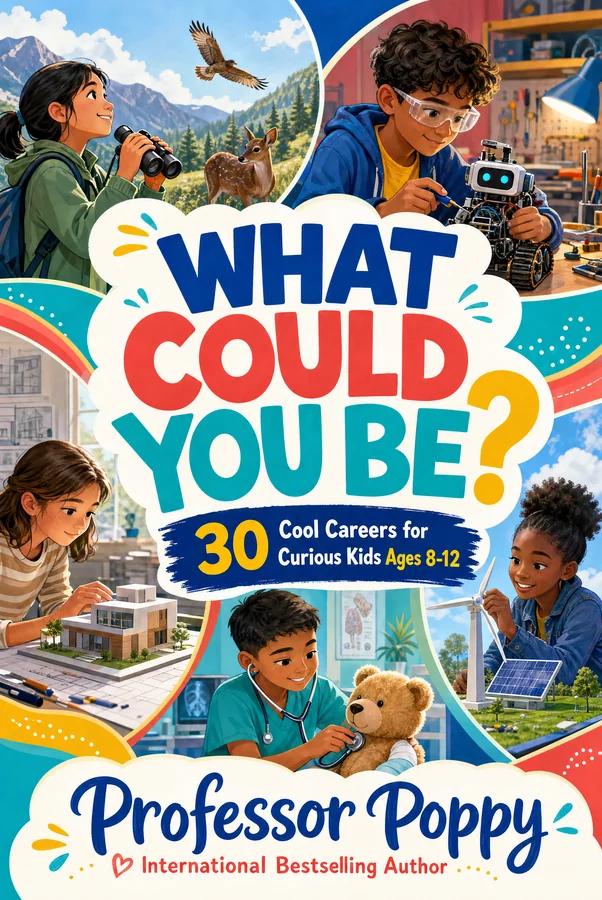
Start with the big picture: What Could You Be? 30 Cool Careers for Curious Kids Ages 8-12. This is our career discovery book and the perfect first stop. Each career opens on a real moment on the job, so kids meet jobs they'd never have thought of and walk away with a much longer "maybe" list. It's an ideal companion for dream trees and career of the week picks.
Then dive deep into a single job:
- If You Became a Doctor Tomorrow: saving lives, surgery and the real secrets of caring for patients.
- You Are the Veterinarian: for animal lovers who want to care for patients with paws and solve medical mysteries.
- If You Were a Pilot: take the left seat, plan the flight and make the big call when a storm rolls in.
- If You Were a Police Officer: solve cases and discover how officers protect their community.
- You Are the Engineer: design, build, test and fix real-world problems like a true engineer.
- You Are the Robotics Engineer: design smart machines and build robotic systems that solve real challenges.
- If You Were a Firefighter: race to the scene, battle blazes and learn what bravery looks like every day.
- If You Were a Teacher: plan lessons, help different learners and shape curious minds.
- If You Went to Space Tomorrow: rocket launches, floating in orbit and daily life far above Earth.
- If You Became a YouTuber Tomorrow: what it really takes to become an online video creator, from filming and editing to staying safe online.
Looking for more? Browse all our books for kids, play a game together on our games page, or read our guide to life skills for kids by age.
Quick answers
At what age should kids start exploring careers?
You can start in the preschool years, as long as it's playful. Young children learn about jobs through pretend play, books and the helpers they meet. Deeper conversations about interests, school subjects and training fit naturally from around ages 9 to 14.
What are good career activities for kids at home?
Pretend workplaces, ask-a-helper interviews, a career of the week, building projects and career spotting on everyday errands all work well. The best activities let kids actually do a small piece of the job, like caring for a stuffed patient or testing a cardboard bridge.
What if my child keeps changing their mind?
That's a great sign. Trying on lots of jobs is exactly what childhood is for, and every new interest teaches them something about themselves. Celebrate each idea and explore it a little together.
How do I talk about careers without pressuring my child?
Keep the focus on interests, questions and effort rather than on choosing. Avoid ranking jobs as better or worse, and share stories of people who changed careers. If your child seems anxious about the future, keep things light and mention it to their teacher or school counselor.
How can I help my daughter (or son) see that every job is open to them?
Show people who break the stereotype, use gender-neutral job titles and ask your child, "Could anyone do this job?" Praise effort and practice rather than being "naturally smart," since research shows kids pick up ideas about who is brilliant as early as age 6.
Sources
- OECD, Dream Jobs? Teenagers' Career Aspirations and the Future of Work (2020)
- Education and Employers with the UCL Institute of Education, Drawing the Future (2018)
- Miller, Nolla, Eagly and Uttal, Northwestern University, The Development of Children's Gender-Science Stereotypes: A Meta-Analysis of 5 Decades of U.S. Draw-A-Scientist Studies, Child Development (2018)
- U.S. Bureau of Labor Statistics, Occupational Outlook Handbook and K-12 Career Exploration
- American School Counselor Association, The School Counselor and Career Development