Reading & literacy
How Jokes and Riddles Build Kids' Reading Skills
Jokes and riddles build reading skills in sneaky, giggly ways. Learn how wordplay grows sound awareness, vocabulary and comprehension, with ideas by age.
The Professor Poppy team · October 9, 2026 · 7 min read
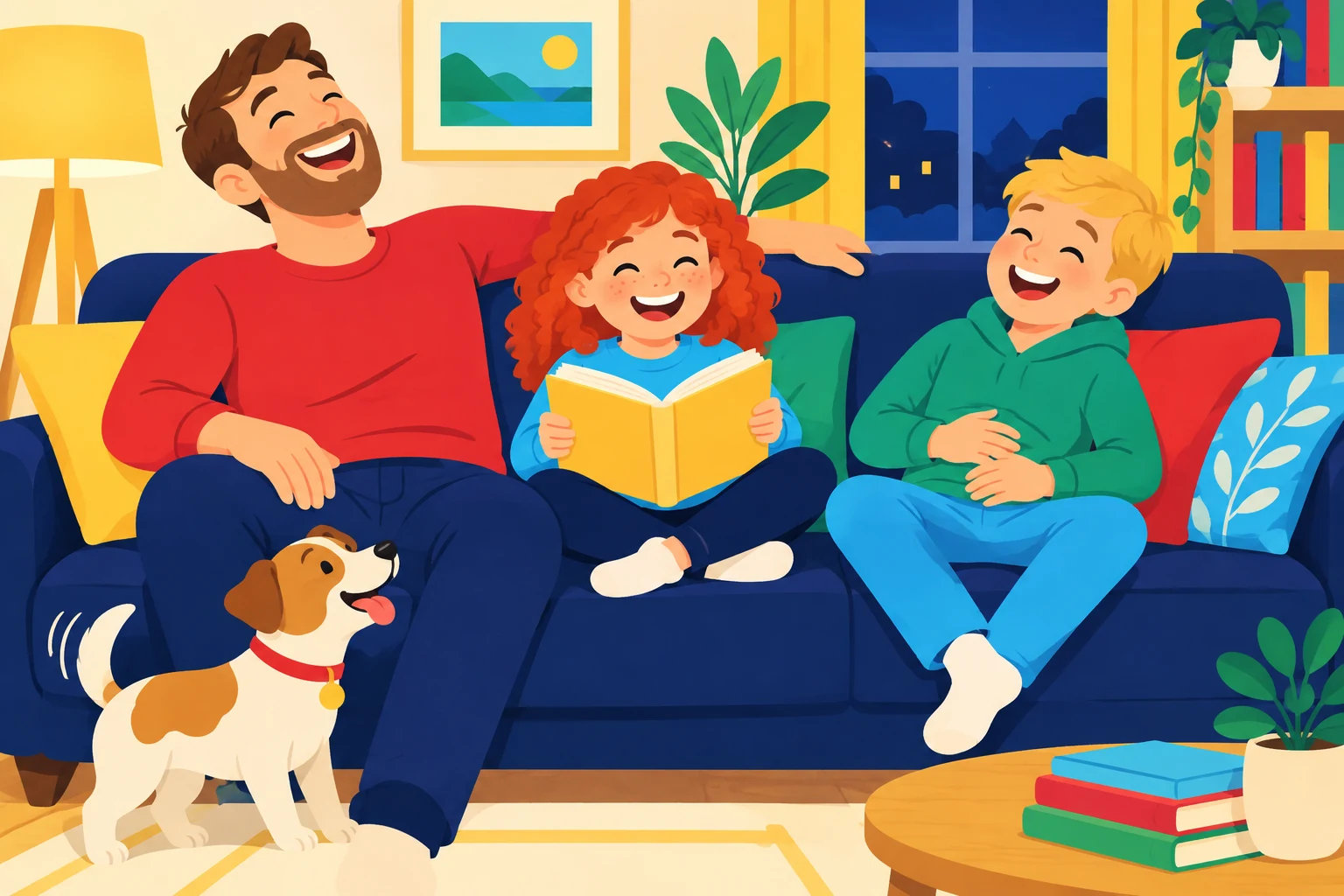
"Knock knock." "Who's there?" "Lettuce." "Lettuce who?" "Lettuce in, it's cold out here!" If you've heard that one eleven times this week, take heart. Your child isn't just being silly. They're doing some surprisingly serious language work.
Jokes and riddles build reading skills because almost every one of them is a tiny puzzle about words: how they sound, what they mean and how one word can mean two things at once. This post explains what's happening inside that giggling brain, and how to turn joke time into easy, everyday reading practice.
At a glance
- Rhymes, puns and knock-knocks train kids to hear the sounds inside words, a key early reading skill.
- Getting a joke means noticing that a word or sentence can mean two things, which is real comprehension work.
- Kids happily reread and rehearse jokes, which builds smooth, confident reading aloud.
- Joke books are a low-pressure win for kids who find reading hard or boring.
Why it matters
Before children read well, they need to hear words clearly: the rhymes, the beginning sounds and the little sound chunks inside them. The National Early Literacy Panel, convened by the National Institute for Literacy, found that this sound awareness, called phonological awareness, is one of the strongest early predictors of later reading success. Rhyming jokes, tongue twisters and silly word swaps are exactly this kind of sound play.
Jokes also stretch understanding. Researchers at the University of Sussex in England studied children aged 7 to 9 who understood the words they read but struggled to grasp the meaning. When those children worked in pairs to talk through joking riddles that hinge on double meanings, their reading comprehension improved more than that of similar children who didn't take part. The children who improved most were the ones who got better at explaining both meanings of a joke out loud.
And there's the joy factor. Pediatricians at the American Academy of Pediatrics describe playful learning as essential for healthy development, helping build language, problem-solving and social skills. Shared laughter over a riddle is play in its purest form.
7 ways to use jokes and riddles to build reading skills
1. Start with rhymes and sound swaps
For younger children, the funniest jokes are often about sound, like a goat in a coat on a boat. Silly rhymes, tongue twisters and nonsense words help kids notice that words are made of sounds they can stretch, swap and play with. That skill is the foundation of sounding out words later.
Try this: Play "Silly Swap" in the car. Change the first sound of a word: "Let's have a snack. A wack? A zack? A quack?" Let your child keep the chain going.
2. Explain the double meaning, out loud
Puns work because one word has two meanings. "Why did the student eat his homework? Because the teacher said it was a piece of cake!" When kids explain why a joke is funny, they practice something strong readers do all the time: checking whether a word makes sense in context.
Try this: After a joke lands, ask, "What are the two meanings that make it funny?" If they can explain it, they've truly understood it.
3. Turn riddles into detective work
A good riddle gives clues and asks kids to reason their way to the answer. That's the same thinking they use to work out what a character is feeling or what will happen next in a story. Riddles teach kids to slow down, reread and use every clue.
Try this: Read a riddle, then give your child three guesses before revealing the answer. Ask, "Which clue helped you most?"
Professor Poppy's tip: Laugh at the joke even if you've heard it before. A child who feels funny feels confident, and confident kids read more.
4. Rehearse for a big performance
Telling a joke well takes timing, expression and a smooth delivery. To get there, kids reread the same joke again and again without complaint. That repeated reading builds fluency, the ability to read smoothly and with feeling, which is a big step toward understanding longer texts.
Try this: Hold a weekly "Comedy Club" at dinner. Each child rehearses three jokes from a book, then performs them for the family.
5. Grow vocabulary with homophones and puns
Many jokes depend on words that sound alike but mean different things, like "knight" and "night," or "flour" and "flower." Talking through these pairs builds vocabulary and spelling awareness at the same time, and kids remember them because they're attached to a laugh.
Try this: Keep a "Same Sound, Different Word" list on the fridge. Add a pair every time a joke uses one.
6. Let them write their own
Writing a joke is harder than reading one. Kids have to choose words carefully, set up the surprise and test it on an audience. It's real writing practice, and it shows them how much words can do. Expect some wonderfully terrible jokes along the way. That's part of the fun.
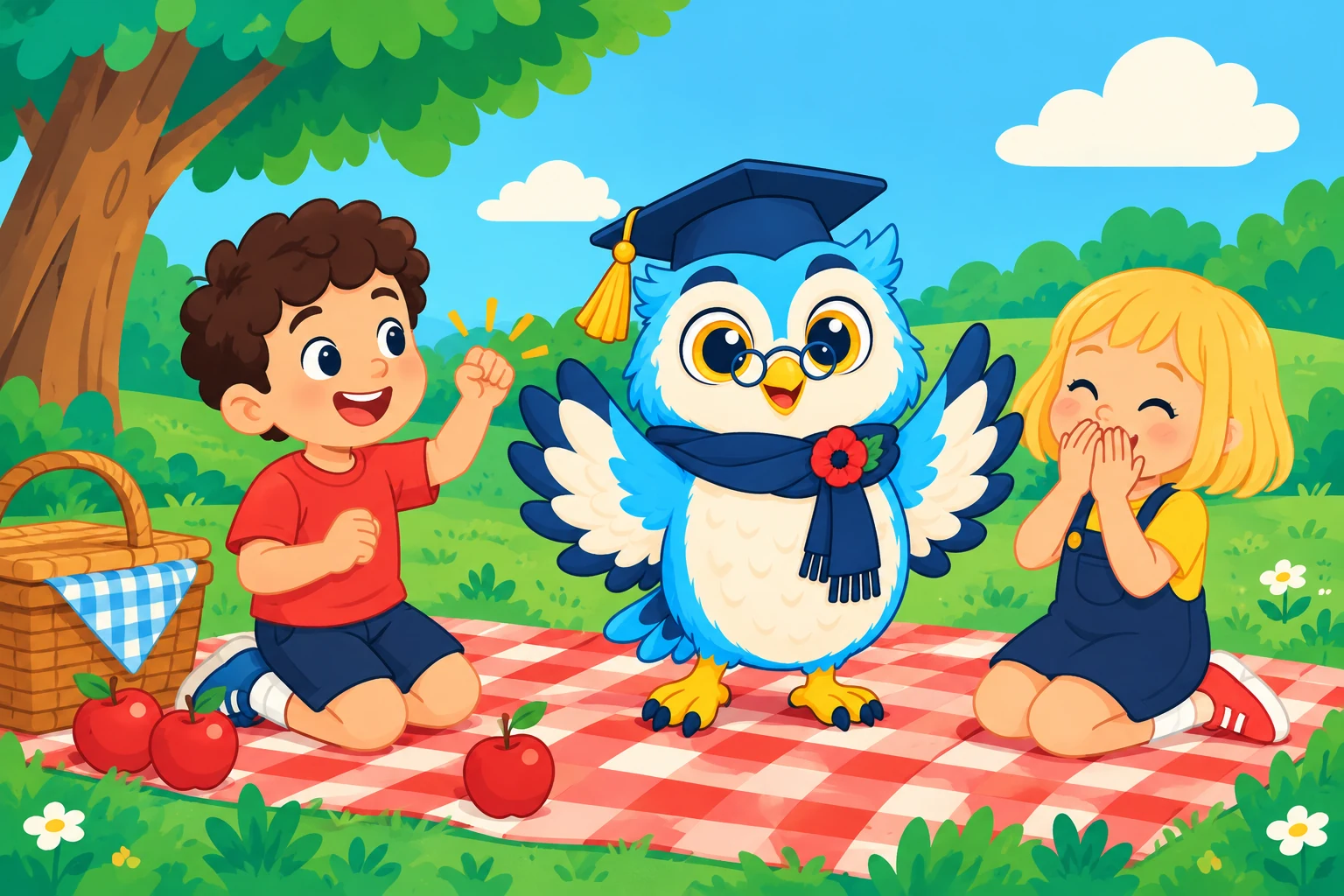
Try this: Give your child a starter, such as "What do you call a sleepy dinosaur?", and let them invent the punchline. (One answer: a dino-snore!)
7. Use joke books as a reluctant reader's way in
Joke books are short, visual and easy to dip into. There's no plot to lose track of, every page is a quick win, and the reward is instant. For a child who avoids reading, being the person with the best joke at lunch can be the first time reading feels like a superpower.
Try this: Put a joke book in your child's backpack or the car, and ask for "the joke of the day" at pickup.
Age by age
| Age | What it looks like | How to help |
|---|---|---|
| 4 to 5 | Laughs at silly sounds, rhymes and nonsense words; may not get puns yet. | Play rhyming games, read silly rhyming books and make up nonsense words together. |
| 6 to 7 | Loves knock-knock jokes, starts to get simple puns, repeats favorites endlessly. | Read joke books together, let them perform, and gently explain double meanings. |
| 8 to 9 | Enjoys riddles, wordplay and trickier puns; can explain why a joke is funny. | Ask "why is it funny?", try harder riddles and start a homophone list. |
| 10 to 12 | Appreciates clever wordplay, sarcasm and logic puzzles; writes original jokes. | Challenge them to write jokes and riddles, and try brain teasers with multiple steps. |
Try it tonight: the Riddle Relay
Time: about 15 minutes. You'll need: a joke or riddle book, two small pieces of paper per person and a pencil.
- Each person secretly picks one riddle from the book and copies it onto a piece of paper, with the answer on the back.
- Take turns reading your riddle aloud. Everyone else gets two guesses.
- Whoever guesses right explains which clue gave it away.
- For the last round, everyone invents a brand-new riddle about something in the room.
Reading, rewriting, listening and explaining all happen in one silly game. Want more screen-free fun? See our ideas for a family game night, or try our free reading games.
Professor Poppy's tip: When a joke falls flat, ask, "How could we make it funnier?" Fixing a joke is editing, and editing is a reading and writing skill.
Books that help
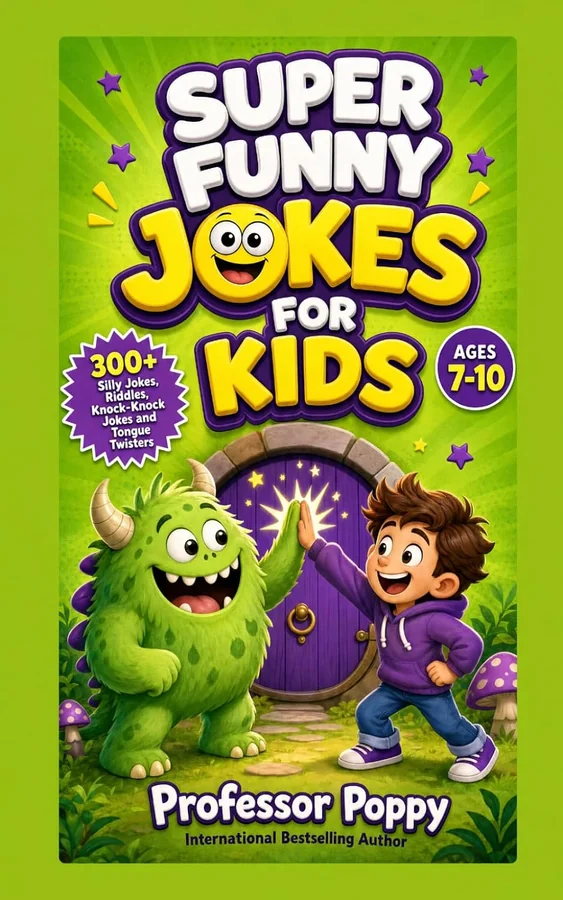
- Super Funny Jokes for Kids mixes clean jokes, riddles, knock-knocks and tongue twisters in themed sections with big funny pictures, perfect for rehearsing a dinner-table show.
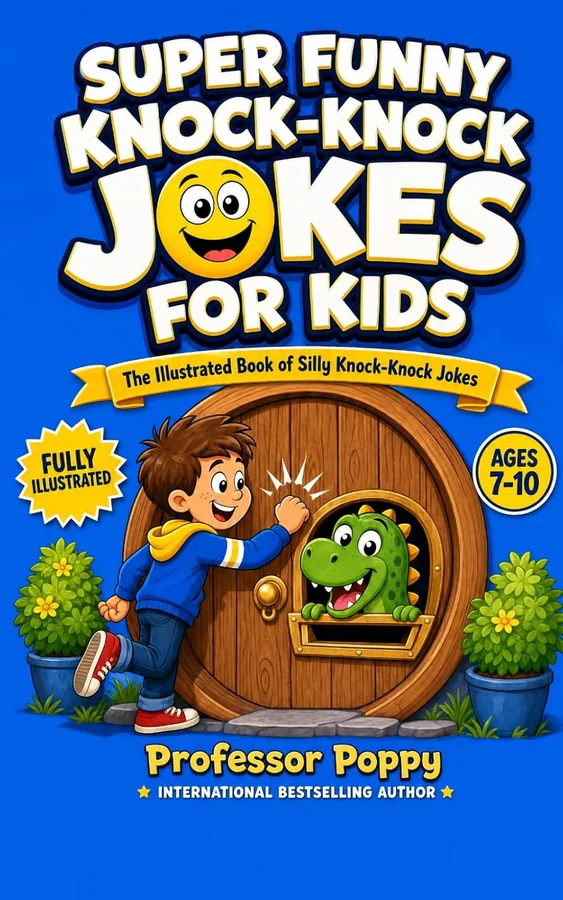
- Super Funny Knock-Knock Jokes for Kids is packed with easy-to-perform knock-knocks that build sound play and timing.
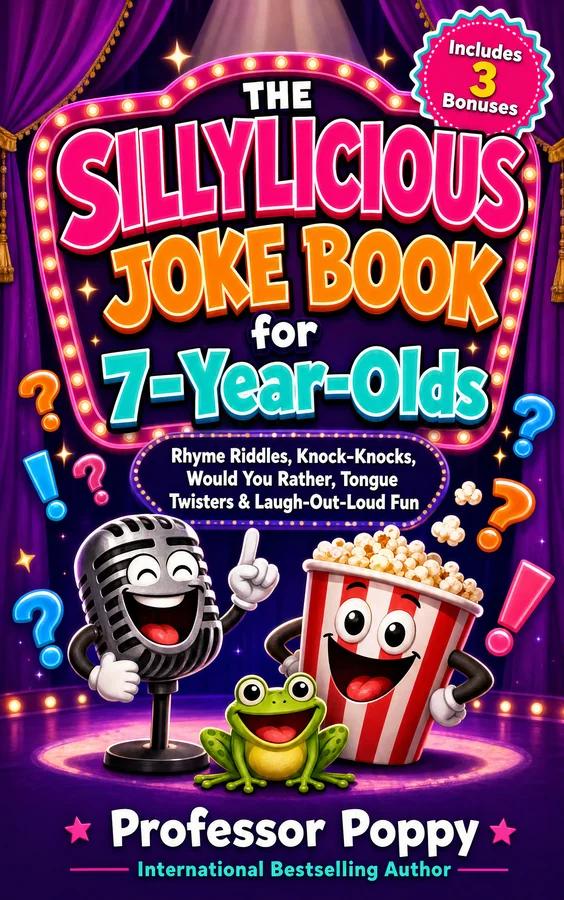
- The Sillylicious Joke Book for 7-Year-Olds offers rhyme riddles and tongue twisters kids can read on their own or perform for the family.
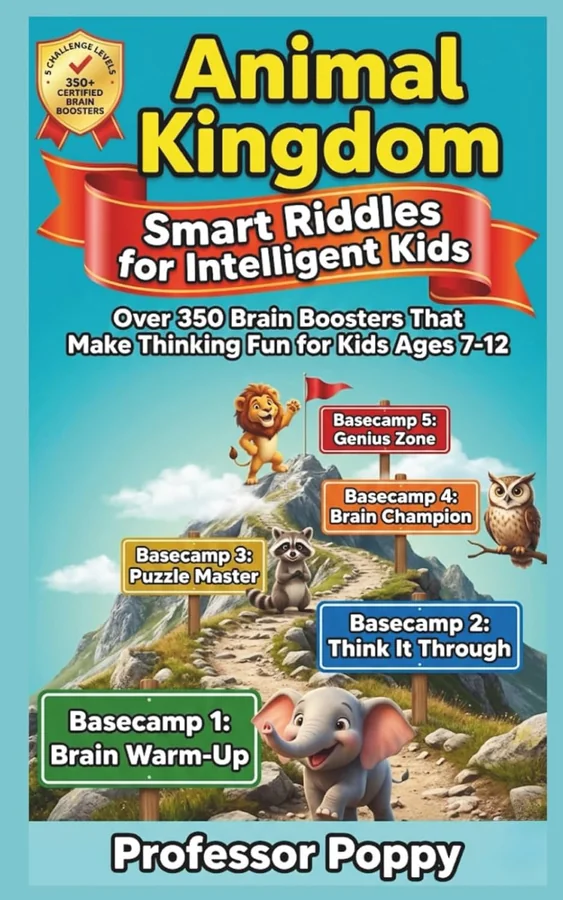
- Animal Kingdom: Smart Riddles for Intelligent Kids climbs from easy warm-ups to tough brain teasers, so riddle-solvers grow their reasoning step by step.
Quick answers
Are joke books good for reading?
Yes. Joke books give kids short, rewarding reading they want to repeat, and many jokes depend on sound play and double meanings that build real reading skills. They're especially helpful for kids who find long books overwhelming.
At what age do kids understand jokes?
Most preschoolers laugh at silly sounds and surprises. Many children begin to understand simple puns and double meanings around ages 6 to 7, and wordplay keeps getting more sophisticated through the elementary years. Every child develops at their own pace.
How do riddles help with reading comprehension?
Riddles ask kids to read carefully, use clues and notice when a word could mean more than one thing. Those are the same habits strong readers use to understand stories and information. Talking through why a riddle works makes that thinking even stronger.
Sources
- National Institute for Literacy: Developing Early Literacy, Report of the National Early Literacy Panel
- University of Sussex: research on joking riddles, ambiguity and reading comprehension in children aged 7 to 9
- American Academy of Pediatrics: The Power of Play, A Pediatric Role in Enhancing Development in Young Children