Activities & printables
Screen-Free Family Game Night Ideas Kids Actually Love
Screen-free family game night ideas for every age, from question games to charades, plus why playing together builds language, patience and bonds.
The Professor Poppy team · October 9, 2026 · 8 min read
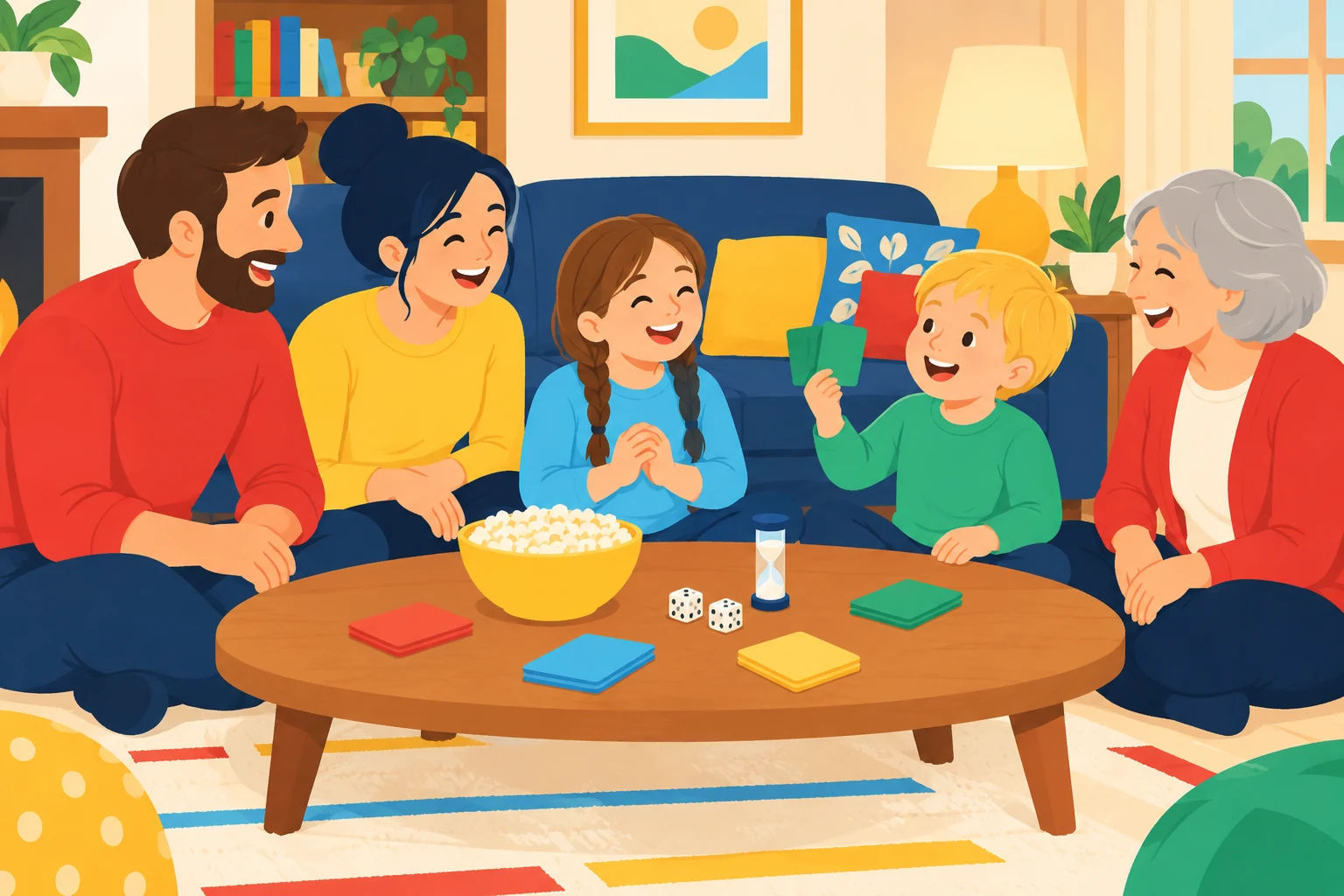
It's Friday night. Everyone is in the same room, and everyone is staring at a different screen. Someone laughs at a video nobody else can see. You look around and think, "We used to actually talk to each other."
A family game night can fix that in less time than a movie. You don't need a cupboard full of boxed games or a big plan. Most of the best screen-free family game night ideas need nothing more than a few people, a bit of paper and a willingness to be silly. Here's why it's worth it, plus ten simple games that work for little kids, big kids and grown-ups at the same table.
At a glance
- Playing together builds language, patience, turn-taking and family bonds.
- The best family games are short, simple and easy to adapt for different ages.
- Question games are a brilliant way to get kids talking and thinking.
- Keep phones in a basket, keep it light, and let the kids pick some of the games.
Why it matters
Play isn't a break from learning. It's one of the main ways children learn. In a clinical report on the power of play, the American Academy of Pediatrics explains that playing with parents and other children builds social and emotional skills, thinking skills, language and self-control. The same report notes that the shared joy of playing together helps children's bodies handle stress.
Games are also a workout for the brain's "air traffic control" skills. The Center on the Developing Child at Harvard University describes executive function as working memory, mental flexibility and self-control, and it recommends games for practicing them, from movement games like Simon Says with younger kids to card games and strategy games with older ones. Every time your child waits for their turn, remembers a rule or changes plans when a card goes the wrong way, they're building those skills.
And it helps to plan for it. The American Academy of Pediatrics encourages families to make a family media plan with screen-free times and places, such as mealtimes and bedrooms. A weekly game night is an easy, fun screen-free time to add.
10 screen-free family game night ideas
1. Would You Rather
Everyone takes turns asking two-choice questions: "Would you rather have a pet dragon or a pet unicorn?" The rule that makes it a learning game is simple: you have to explain why. Kids practice giving reasons, listening and seeing things from someone else's point of view.
Try this: After each answer, ask, "Did anyone change their mind after hearing that reason?"
2. This or That Lightning Round
A faster cousin of Would You Rather. One person reads quick pairs, like pizza or tacos, beach or mountains, and everyone answers at the same time by pointing left or right. It's great for warming up a shy group and for little ones who aren't ready for long explanations.
Try this: Keep score of who matches the most with each other, then crown the "most alike" pair of the night.
3. Twenty Questions
One person thinks of an animal, food or object. Everyone else asks yes-or-no questions to figure it out. Kids learn to ask smarter questions and narrow things down, which is real scientific thinking in disguise.
Try this: For younger players, stick to one category, like animals, and let them use a picture book for ideas.
4. Charades
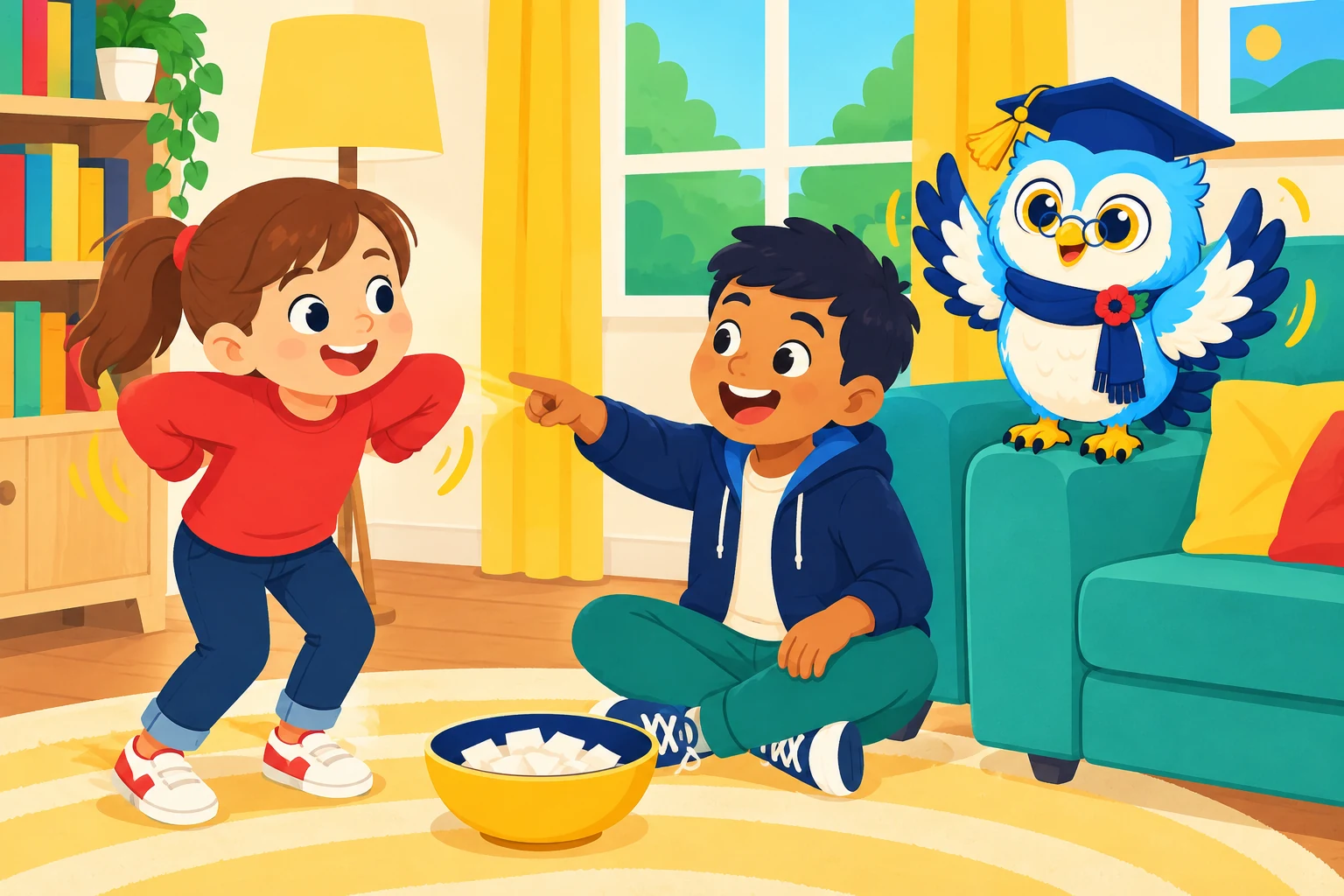
Write simple actions or animals on slips of paper and fold them into a bowl. Players act them out without words while the others guess. Even toddlers can join in with an adult helper, and everyone ends up laughing.
Try this: Draw a slip with your child, then whisper a plan for how to act it out together as a team.
5. Story Chain
One person starts a story with a single sentence. The next person adds a sentence, and around it goes. Stories get wonderfully weird, and kids build vocabulary, listening and creativity without noticing.
Try this: Start with "Once upon a time, a very sleepy owl found a mysterious key..." and see where it goes.
6. Joke-Off
Take turns telling jokes. The challenge is to keep a straight face while everyone else tries to make you laugh. Telling a joke well takes timing and clear speech, and getting it is a great test of understanding wordplay.
Try this: Let each player pick a favorite joke ahead of time and practice it once before game night.
7. Memory Match
Lay a deck of cards face down in rows. Players take turns flipping two cards, looking for a matching pair. It's simple enough for preschoolers and a real test of memory for grown-ups.
Try this: For little ones, use only a few pairs at first and add more as they get the hang of it.
8. Simon Says
The leader gives commands, but players should only follow them when they begin with "Simon says." It's a classic for a reason: kids practice listening and stopping themselves from acting on impulse.
Try this: Let a child be the leader and watch how carefully they choose their tricky commands.
9. Category Race
Pick a category, like animals, fruits or things in a kitchen, and go around the circle naming one each. If you get stuck or repeat one, you're out for that round. Use a sand timer for extra excitement.
Try this: Give younger kids an easier category, or let them team up with a grown-up.
10. Hidden Object Hunt
One person hides a small object somewhere in the room while the others close their eyes. The hunters search while the hider gives "warmer" and "colder" clues. It gets everyone off the couch and moving.
Try this: Hide something meaningful, like a note that says what's for dessert.
Professor Poppy's tip: Stop while everyone is still having fun. Ending on a laugh, not a meltdown, is what makes kids ask, "Can we play again next week?"
Age by age
Every child is different, so mix and match games to fit your family.
| Age | What it looks like | How to help |
|---|---|---|
| 3 to 5 | Short attention span, big feelings about winning and losing, learning to take turns. | Choose quick games like Simon Says, Memory Match with a few pairs and This or That. Play for fun, not points, and keep it short. |
| 6 to 8 | Loves rules, jokes and being silly. Starting to handle losing a little better. | Try Joke-Off, Charades, Story Chain and Would You Rather. Celebrate good sportsmanship as much as winning. |
| 9 to 12 | Enjoys strategy, competition and clever questions. | Add Twenty Questions, Category Race and longer card games. Let them lead the night and teach the rules. |
| Teens | Wants to feel grown-up and may be harder to convince. | Let them pick the games, team up with younger siblings, or host a family tournament. Keep it relaxed and never forced. |
Try it tonight: the 15-minute Question Game
Time: about 15 minutes. You'll need: paper, a pen and a bowl.
- Everyone writes or draws three fun questions, such as "What's the best smell in the world?" or "Would you rather fly or be invisible?" Fold them into the bowl.
- Take turns pulling out a question. The person who draws it answers first, then everyone else answers too.
- After each answer, someone asks one follow-up question, like "Why?" or "What would you do first?"
- When the bowl is empty, vote on the funniest answer of the night.
Phones go in a basket for the whole game, grown-ups' phones included. Looking for more ways to play? Visit our games page.
Professor Poppy's tip: Let your kids win sometimes, lose sometimes and lead sometimes. Learning to cheer for someone else is one of the best skills game night can teach.
Books that help
- This or That? The Ultimate Quick-Choice Game Book for Kids is packed with ready-to-go quick choices, perfect for the lightning round and for kids who love to answer fast.
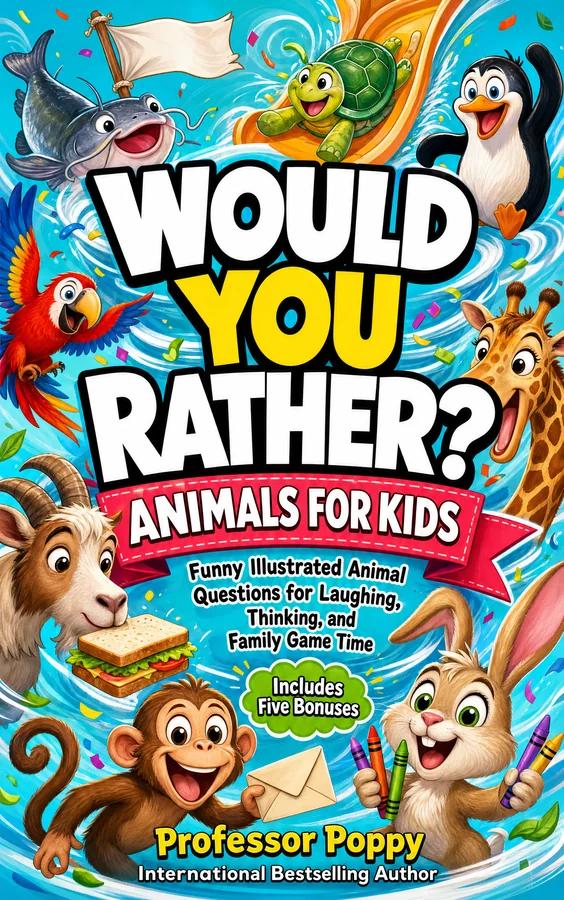
- Would You Rather? Animals for Kids brings silly, thoughtful animal questions that get everyone explaining their choices.
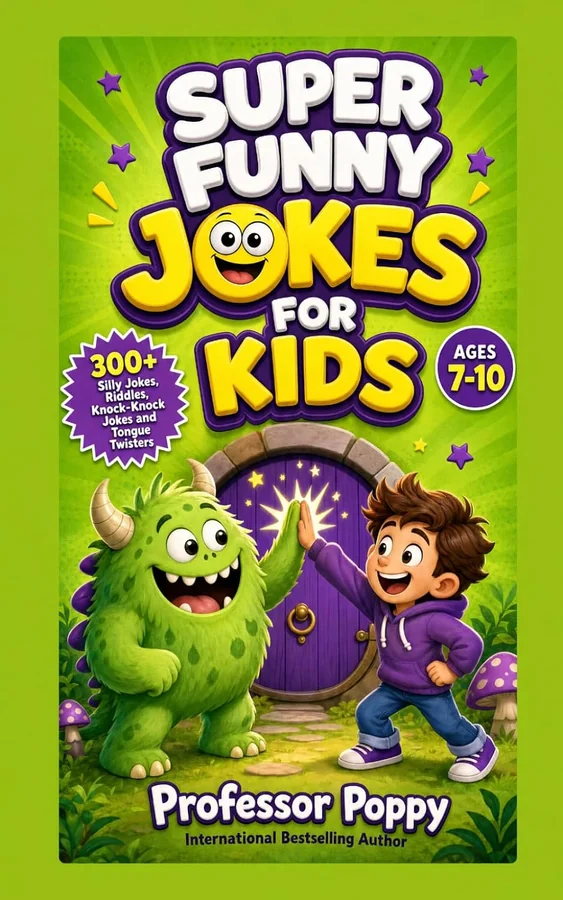
- Super Funny Jokes for Kids gives every player plenty of material for a family Joke-Off.
Got a child who keeps asking questions all night? Read our guide on how to answer kids' why questions.
Quick answers
How often should we have family game night?
Once a week is a great goal, but even once a month is worth it. What matters most is that it feels fun and regular, so kids look forward to it. Pick a night that works for your schedule and stick to it.
What if my child gets upset when they lose?
That's very normal, especially for younger children. Talk about feelings calmly, play cooperative games where everyone works together, and model being a good sport yourself. With practice, most kids learn to handle losing better.
How do I get teenagers to join family game night?
Give them a say. Let them choose the games, invite a friend, or put them in charge of running the night. Keep it light, add good snacks, and don't force it. Teens often join in when it feels fun rather than required.
Sources
- American Academy of Pediatrics: The Power of Play, A Pediatric Role in Enhancing Development in Young Children (2018)
- American Academy of Pediatrics, HealthyChildren.org: Family Media Plan
- Center on the Developing Child at Harvard University: Enhancing and Practicing Executive Function Skills with Children from Infancy to Adolescence