Life skills
Life Skills for Teen Boys: What to Learn Before Leaving Home
Life skills for teen boys to learn before leaving home, from budgeting and cooking safely to car care, first jobs and handling his own health.
The Professor Poppy team · October 9, 2026 · 8 min read
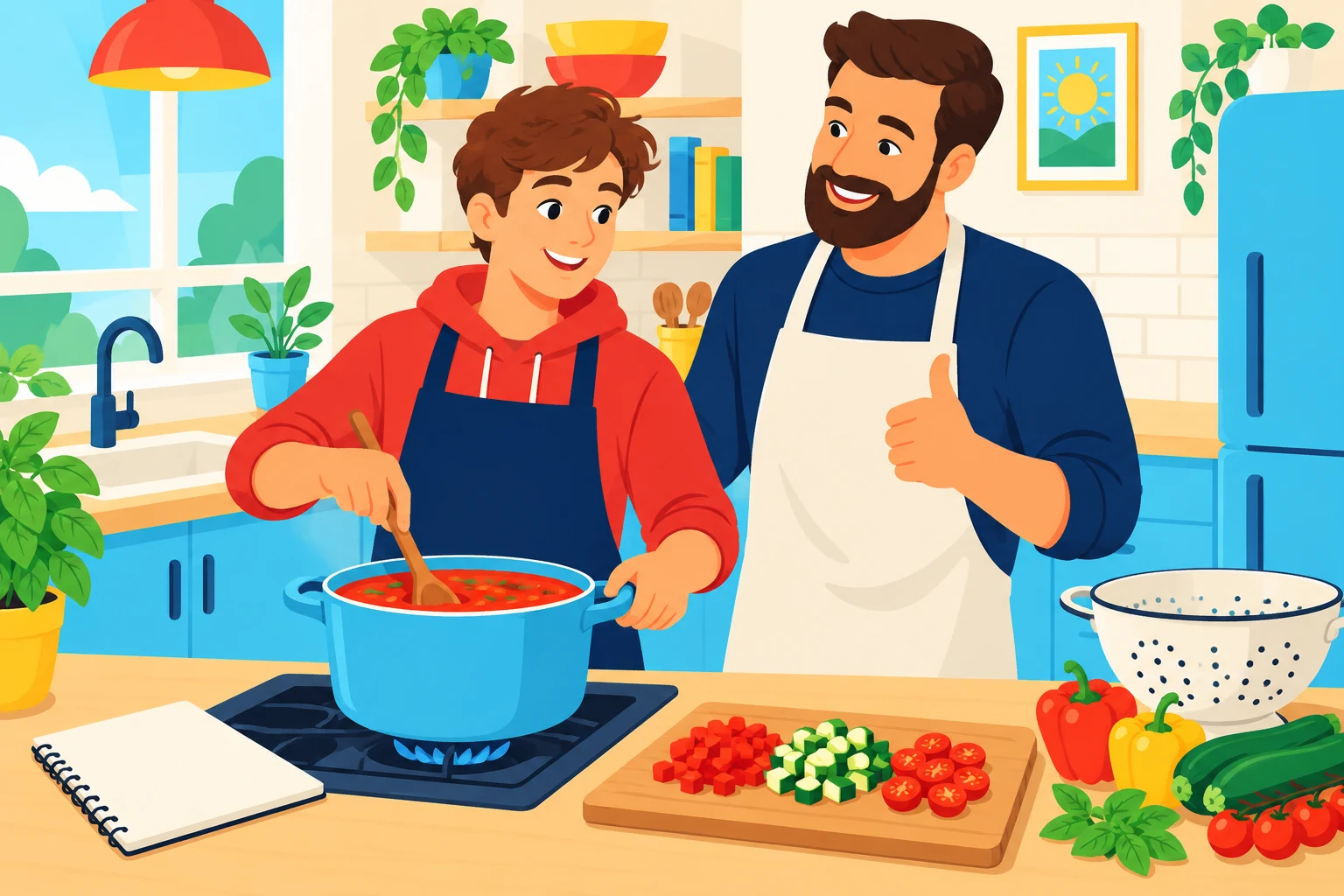
He can build a whole city in a video game, quote every stat of his favorite team and fix your phone settings in ten seconds flat. Then you ask him to book his own dentist appointment, and he looks at the phone like it might bite.
Plenty of families hit this moment around fifteen or sixteen. The big launch, whether it's college, a first apartment or a first full-time job, suddenly feels close, and the list of things nobody has taught him yet feels long. This guide covers the life skills for teen boys that matter most before leaving home, and how to teach them without lectures, nagging or eye rolls. (Nearly all of it works just as well for teen girls, too.)
At a glance
- The teen years are the perfect time to practice adult skills while the safety net is still close.
- Focus on six areas: money, food, home, car, health and work.
- Hand over real responsibility in small steps, and let him own the result.
- Teach once, step back, and resist the urge to redo it for him.
Why it matters
Teen brains are built for this. According to the National Institute of Mental Health, the brain keeps developing until the mid-to-late twenties, and the prefrontal cortex, the area behind the forehead that handles planning, prioritizing and decision-making, is one of the last parts to mature. The same research also stresses that the teen brain has an amazing ability to adapt to new experiences. In plain words: planning skills are still under construction, and real practice is what builds them.
That's why doing beats telling. A teen who has burned the rice, overdrawn a small account or forgotten to buy a bus pass while still living at home learns the lesson with a parent nearby to help him regroup. The same mistake at nineteen, alone, costs a lot more.
6 life skills every teen boy should learn
1. Run his own money
Start with the basics: a checking account with a debit card, a simple monthly budget and a savings goal. Explain the difference between a debit card (spending your own money) and a credit card (borrowing money that charges interest if you don't pay it back on time). Then let him manage a real amount, like his clothing budget or his phone bill, so the stakes are small but genuine.
Try this: Give him the grocery list and a set budget for one week's family dinners. He plans, shops and keeps the receipt. Whatever he saves goes into his own savings account.
2. Cook a handful of real meals, safely
Every young adult should be able to cook a few cheap, filling meals: eggs, pasta with sauce, a stir-fry, a sheet-pan chicken and vegetable dinner. Just as important is food safety. The U.S. Department of Agriculture recommends cooking poultry to 165°F and ground beef to 160°F, checked with a food thermometer, and refrigerating leftovers within two hours (one hour if it's above 90°F outside).
Try this: Make him "head chef" one night a week. He picks the recipe, writes the shopping list and cooks while you play assistant. Buy him his own food thermometer as a graduation-to-the-kitchen gift.
Professor Poppy's tip: Teach by doing it together once, then hand it over completely. The second time, stay out of the kitchen unless he asks. Hovering turns a skill into a chore.
3. Look after a home
Laundry is the classic one: sorting colors, reading care labels, not overloading the machine and actually folding the clean clothes. Add the small jobs that make a first apartment livable: cleaning a bathroom, taking out trash and recycling on the right day, unclogging a toilet with a plunger and knowing where the water shut-off valve is in case of a leak.
Try this: Give him a "home skills checklist" for the year. Each time he does a job on his own, he checks it off. Walk around the house together once to find the water shut-off valve and the circuit breaker panel.
4. Handle the car basics
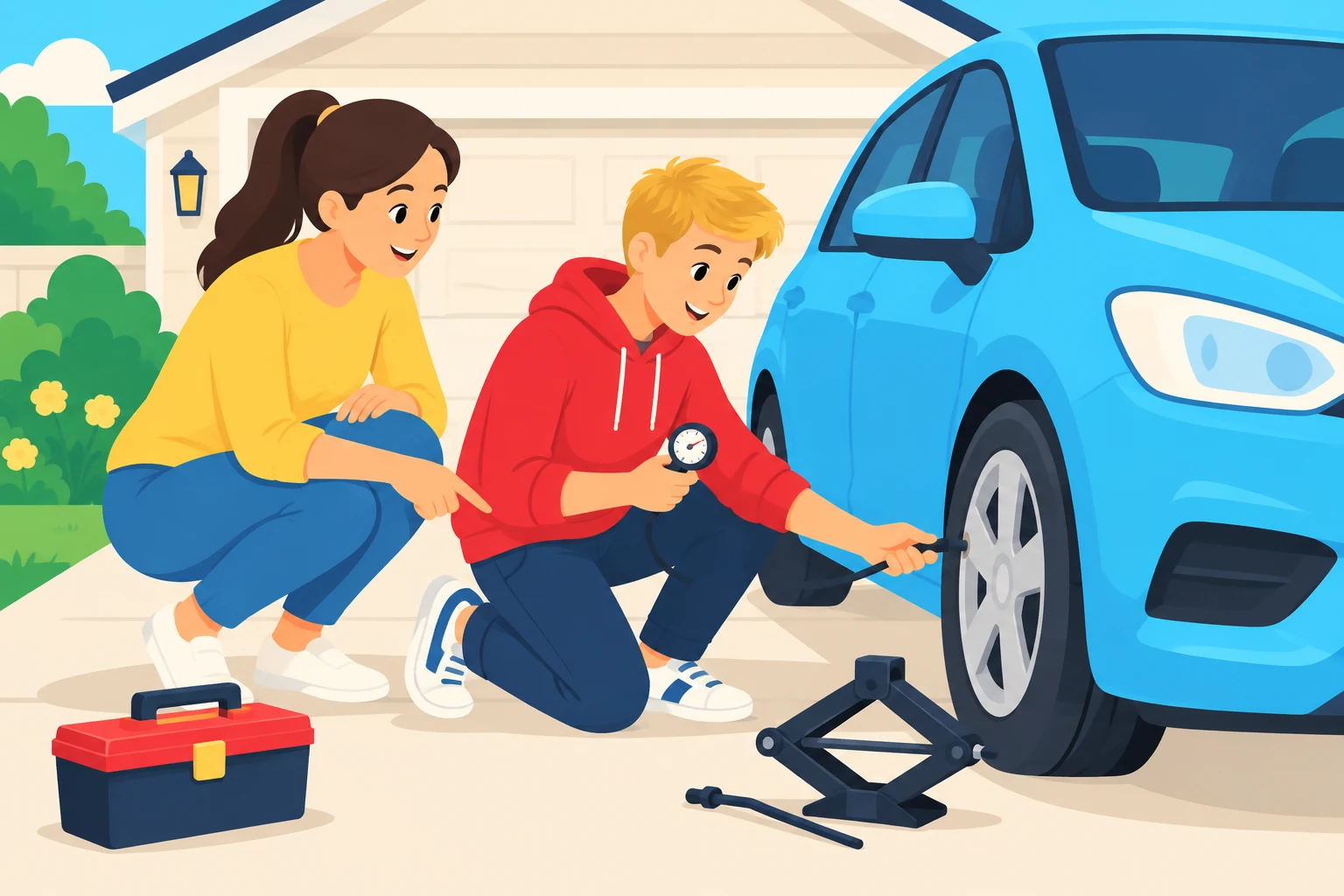
Even teens without their own car will ride in, borrow or one day own one. Show him how to check the tire pressure, using the recommended number on the sticker inside the driver's door rather than the number on the tire itself. Traffic safety officials at the National Highway Traffic Safety Administration recommend checking tire pressure at least once a month, when the tires are cold. Add checking the oil, topping up washer fluid, and knowing what to do after a flat tire or a minor crash.
Try this: Spend one Saturday morning on a "car lab": he checks all four tires, finds the spare and the jack, and saves a roadside-help number in his phone.
5. Take charge of his own health
Before he leaves home, he should know his allergies, any medicines he takes, how to refill a prescription and how to book his own doctor and dentist appointments. Pediatricians at the American Academy of Pediatrics encourage teens to spend part of each checkup alone with their doctor, which builds the confidence to speak up for himself. Sleep belongs here too: the Centers for Disease Control and Prevention recommends 8 to 10 hours a night for teens ages 13 to 17.
Try this: Next time an appointment is due, he makes the call or books it online himself, with you nearby for backup. Keep a copy of his insurance card in his wallet, not yours.
6. Find, keep and do well at a job
A first job teaches time management, teamwork and how to talk to a boss, lessons no classroom quite matches. Help him write a simple one-page resume, practice a few interview questions and pick out an outfit for the interview. If he's 14 or 15, the U.S. Department of Labor limits work to 3 hours on a school day and 18 hours in a school week, and many states add their own rules, so check before he signs up.
Try this: Hold a five-minute mock interview at the kitchen table: "Tell me about yourself," "Why do you want this job?" and "Tell me about a time you solved a problem." Then swap roles so he interviews you.
Age by age
| Age | What it looks like | How to help |
|---|---|---|
| 13 to 14 | Can do laundry, cook simple meals with supervision, manage a small allowance and keep track of his own schedule. | Hand over his own laundry, start a budget for one category, and let him speak at his own appointments. |
| 15 to 16 | Ready for a first job or regular babysitting and yard work, a bank account, cooking full meals and basic car care. | Help with a resume, open a teen checking account, and make him family "head chef" once a week. |
| 17 to 18 | Can book appointments, refill prescriptions, budget for a month, handle small repairs and solve problems on his own. | Step back and act as a consultant. Let him plan a whole week of life: meals, money, rides and schedule. |
Try it tonight: the Leaving Home Scorecard
Time: about 15 minutes. You'll need: a sheet of paper, a pen and a snack for bargaining power.
- Together, list 20 everyday adult tasks, like "book a haircut," "cook a chicken dinner," "change a bike tire" or "pay a bill."
- Next to each one, he rates himself: "I can do this," "I could with help" or "No idea."
- Circle three "No idea" items to learn this month and pick a date for each.
- Pin the list to the fridge and celebrate every time a task moves up a level.
For family-friendly tools and printables, visit our bonus page, or read our earlier guide to life skills for kids by age for younger siblings.
Professor Poppy's tip: When he messes up, and he will, ask "What would you do differently next time?" before you say anything else. That one question turns a mistake into a skill.
Books that help
- Life Skills Guide for Teen Boys shows teen boys how to manage money, cook real food, fix things and land a job, with picture-led steps and a small mission to try each week, plus a Skills Passport to track progress.
- If You Learned About Money Tomorrow is a fun, illustrated introduction to earning, saving, spending and giving, ideal for younger brothers who want to start early.
Quick answers
What life skills should a 16-year-old boy know?
By 16, most teens can learn to cook several simple meals, do their own laundry, manage a bank account and a basic budget, check a car's tires and fluids, and handle a part-time job. Every teen is different, so focus on steady progress rather than a perfect checklist.
How do I teach my teenage son life skills without nagging?
Give him real ownership: a job that's fully his, a budget he controls or a meal he plans. Show him once, step back, and let natural results do the teaching. Short, specific requests work better than long reminders.
Should my teen get a job during high school?
A part-time job can build responsibility, confidence and money skills, as long as school, sleep and health come first. Check your state's rules for working teens, start with a few hours a week, and keep an eye on how he's coping.
Sources
- National Institute of Mental Health: The Teen Brain, 7 Things to Know
- U.S. Department of Agriculture, Food Safety and Inspection Service: Safe Minimum Internal Temperatures
- National Highway Traffic Safety Administration: Tire Safety
- U.S. Department of Labor, Wage and Hour Division: YouthRules for 14- and 15-Year-Olds
- American Academy of Pediatrics (HealthyChildren.org): One-on-One Time with the Pediatrician