Activities & printables
Raising a Nature Lover: Spark Kids' Curiosity About Animals
Raising a nature lover starts small. Easy, fun ways to spark kids' curiosity about animals at home, in the backyard and on park walks, by age.
The Professor Poppy team · October 9, 2026 · 7 min read
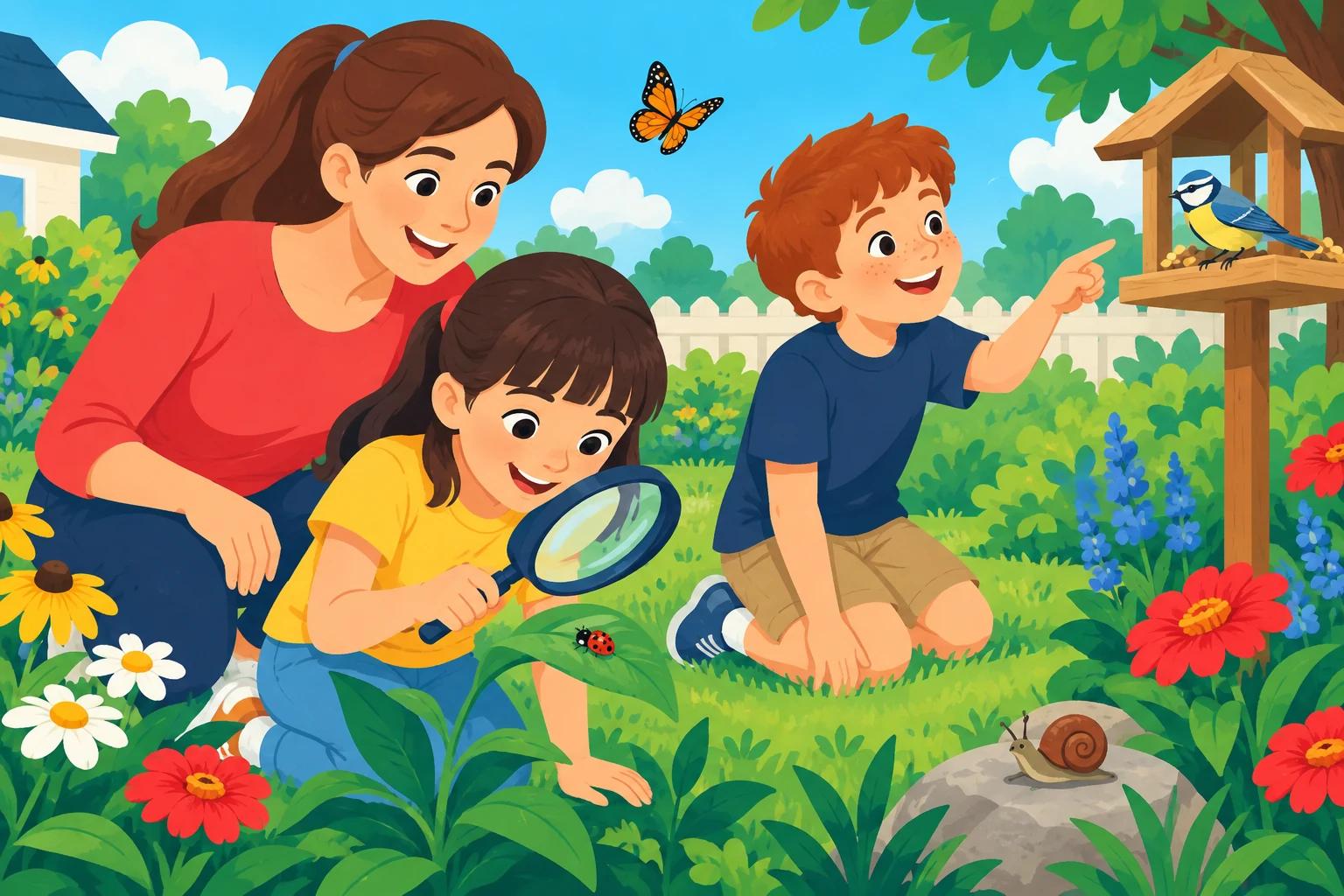
You're halfway to the car when your child stops dead on the sidewalk. A worm. They crouch down, nose almost touching the pavement, and suddenly you're both late and having a full conversation about where worms go when it rains.
That pause is the start of raising a nature lover. Kids are born curious about animals. Our part is simply to slow down, notice what they notice and give that curiosity somewhere to grow. You don't need a farm, a forest or a science degree. A backyard, a city park, a window and a few good questions will do.
At a glance
- Time outdoors supports kids' bodies, moods and learning, and it builds a lifelong love of nature.
- Curiosity grows when grown-ups ask questions instead of only giving answers.
- Watching the same small animals again and again teaches more than one big zoo trip.
- Funny animal facts and silly animal games are a perfect doorway for reluctant explorers.
Why it matters
Pediatricians at the American Academy of Pediatrics say playing outside promotes curiosity, creativity, critical thinking and focus. They also note that children tend to play harder outdoors, and that time in natural settings is linked to less anger and aggression and better impulse control. Their advice for even the youngest babies is to share nature early, because it makes a lifelong love of the outdoors more likely.
Researchers at the University of Illinois found an interesting pattern, too. In a national survey, parents of children with attention difficulties reported that activities in green outdoor settings, like parks and backyards, were followed by fewer attention symptoms than the same kinds of activities indoors. The study can't prove nature caused the difference, but it fits a wider picture: green time is good for growing brains.
And animals are the best hook there is. A child who has never cared about a science lesson will happily spend twenty minutes watching ants carry crumbs.
7 ways to spark your child's curiosity about animals
1. Start with the animals right outside your door
Nature lovers aren't made on safari. They're made by watching the same squirrel, pigeon or spider web every day and noticing what changes. Familiar animals let kids become real experts, which feels wonderful.
Try this: Choose one "neighborhood animal" this week, like the birds at a feeder or the snails after rain, and check on it together every day.
2. Ask questions before you answer them
When your child asks, "Why does that bird hop?", resist the urge to explain right away. Ask what they think first. Guessing, watching and checking is exactly how scientists work, and kids remember what they figure out far longer than what they're told.
Try this: Use three magic questions: "What do you notice?", "What do you wonder?" and "How could we find out?"
3. Share facts that make them say "no way!"
A great animal fact is like a spark: it leaps from one child to the next and lights up a whole dinner table. Did you know an owl can turn its head about 270 degrees? Researchers at Johns Hopkins University discovered the special blood vessel features that let owls do this without cutting off blood to their brains. And an octopus has three hearts.
Try this: Start a "Wild Fact Friday." Each family member brings one surprising animal fact to share, and everyone votes on the weirdest.
4. Give them the tools of a real explorer
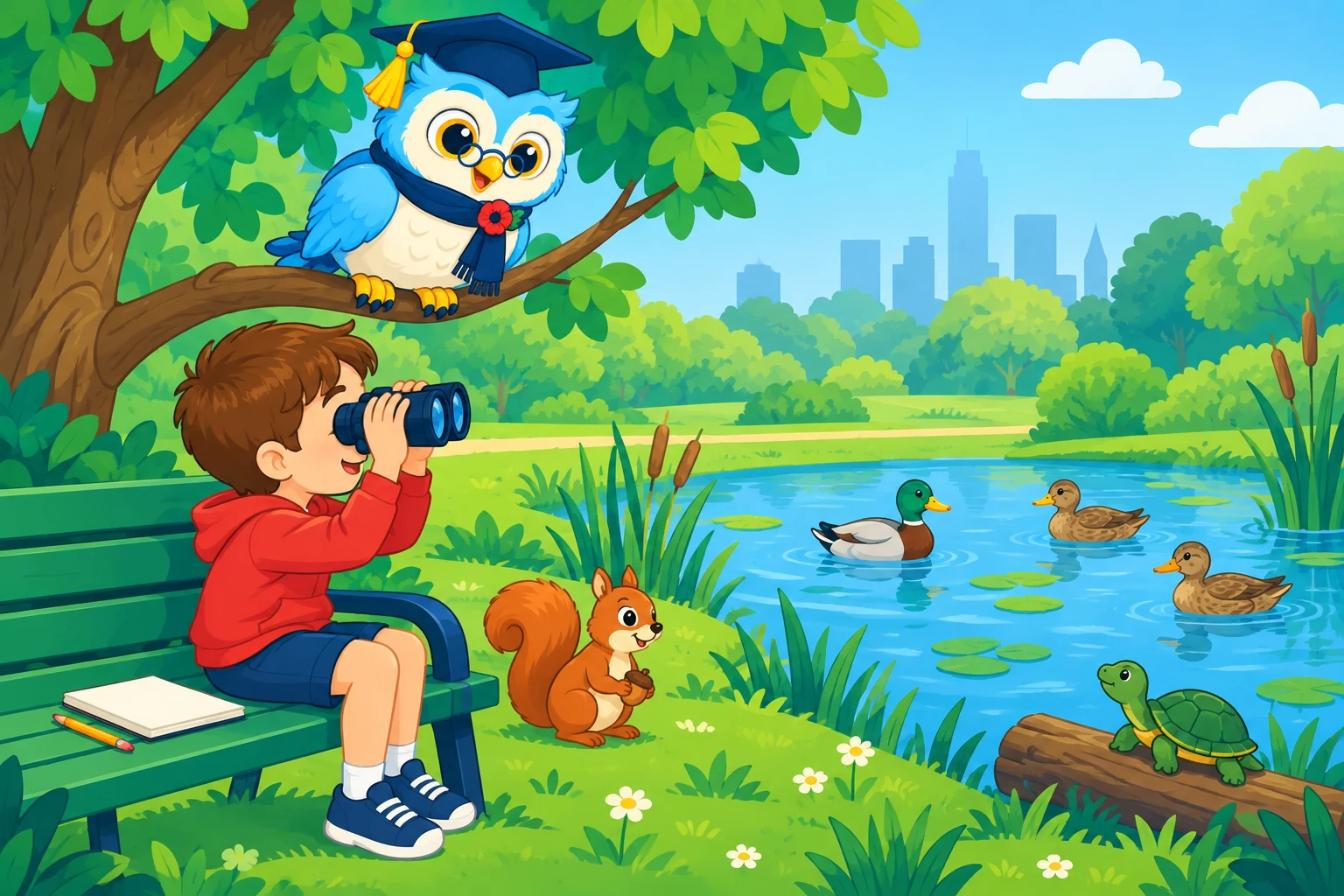
A cheap magnifying glass, a notebook and a pencil turn a walk into an expedition. Kids slow down when they have a job to do. Binoculars are a wonderful upgrade for bird-watching once kids are about six or seven.
Try this: Pack an "explorer kit" bag that lives by the front door, so every walk can turn into a mini field trip.
5. Turn animal love into silly play
Not every child wants to sit still and observe. For wiggly kids, animal fun often starts with laughter: pretending to waddle like a penguin, guessing animal sounds, or debating whether they'd rather have a giraffe's neck or an elephant's trunk. Play like this still builds real knowledge, because kids have to think about how animals actually live.
Try this: Play "Animal Charades" after dinner. Act out an animal using only movements, no sounds, while everyone guesses.
6. Join a real science project
Kids feel ten feet tall when their sightings help real scientists. Every February, the Great Backyard Bird Count, led by the Cornell Lab of Ornithology at Cornell University, invites families to count the birds they see for as little as 15 minutes. Many national parks also run free Junior Ranger programs, where kids complete nature activities to earn a badge.
Try this: Next time you visit a park run by the National Park Service, ask at the visitor center for a Junior Ranger booklet.
Professor Poppy's tip: Teach the explorer's promise early: look closely, touch gently (or not at all), and always leave animals and their homes the way you found them.
7. Let them care about the big picture
Older kids are ready to learn that some animals are rare and need our help. Keep it hopeful rather than scary. Focus on what people are doing to protect animals and what your family can do, like planting flowers for bees or keeping litter out of parks.
Try this: Plant a pot of bee-friendly flowers on a balcony or windowsill and keep a simple tally of the visitors it attracts.
Age by age
| Age | What it looks like | How to help |
|---|---|---|
| 2 to 4 | Points and names animals, copies animal sounds, loves the same picture books again and again. | Name animals on walks, make animal sounds together and watch birds or bugs up close. |
| 5 to 7 | Asks lots of "why" and "how" questions, loves silly animal games and collecting things like leaves and shells. | Ask "What do you notice?", play animal charades and start a nature table at home. |
| 8 to 10 | Ready for facts, records and weird animal trivia, can keep a simple nature journal. | Share surprising facts, try a bird count and visit parks with ranger programs. |
| 11 and up | Interested in habitats, endangered species and how people affect wildlife. | Explore conservation together and let them lead a family nature project. |
Try it tonight: the backyard (or window) safari
Time: about 15 minutes. You'll need: a flashlight, a sheet of paper, a pencil and a window or outdoor space.
- Fold the paper into four boxes and label them: Fly, Crawl, Hop, Mystery.
- Go outside at dusk, or sit by a window, and spend 10 minutes quietly looking and listening. Use the flashlight to check low leaves and walls for crawlers and spiders.
- Draw or write every animal you spot (or hear!) in the right box. Moths, beetles, birds and barking dogs all count.
- Back inside, choose one animal from your list and look it up together in a book. Who found the biggest surprise?
Looking for more family fun? Explore our free games, or read how to answer kids' why questions for the "But why do worms come out in the rain?" moments.
Books that help
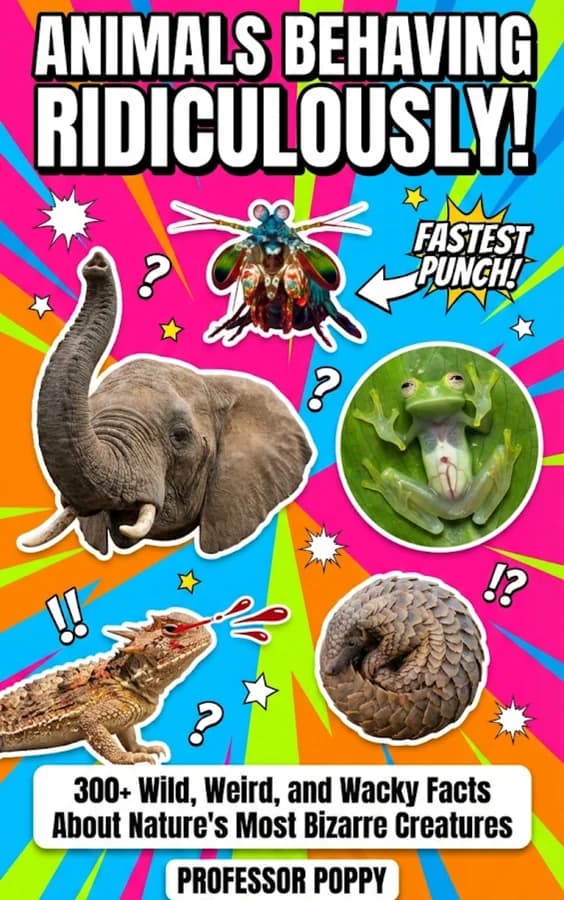
- Animals Behaving Ridiculously! is packed with wild, weird and wacky facts about nature's strangest creatures, perfect for kids who love saying "no way!"
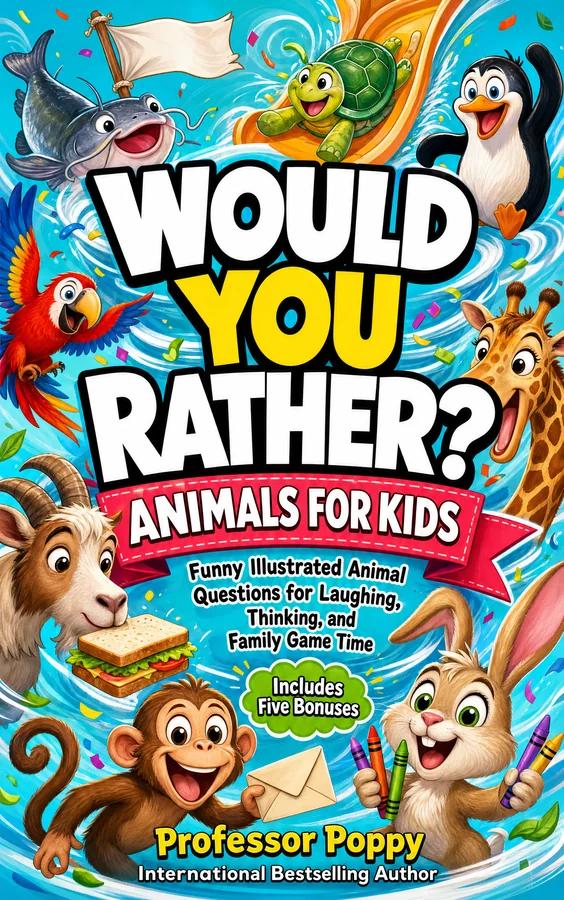
- Would You Rather? Animals for Kids turns pets, jungle beasts and ocean creatures into funny choices to debate, great for wiggly kids who learn best by laughing.
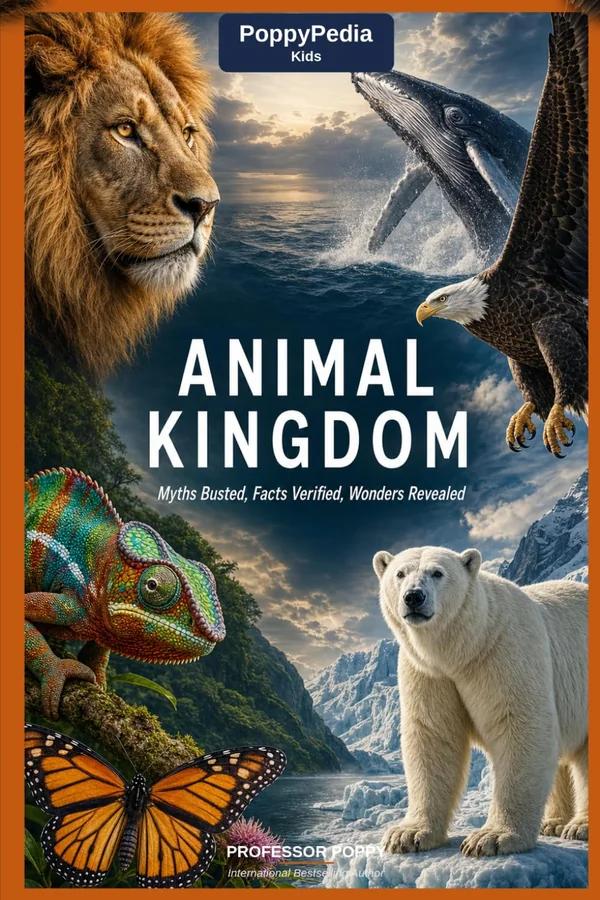
- PoppyPedia: Animal Kingdom introduces the fastest, strangest and most misunderstood animals, with a myth busted in every chapter.
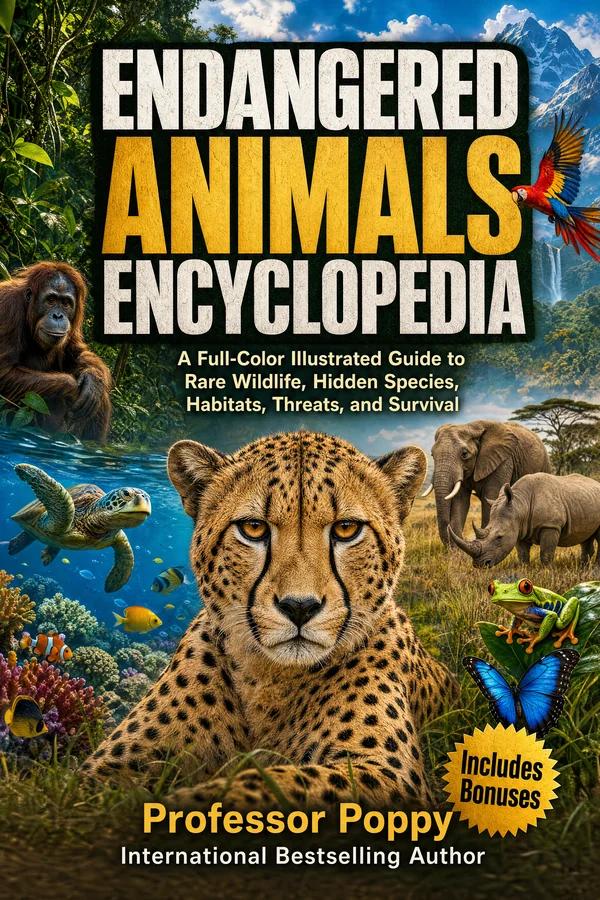
- Endangered Animals Encyclopedia gently introduces rare wildlife, their habitats and real reasons for hope.
- PoppyPedia: Bugs and Insects is ideal for the child who never walks past a beetle without stopping.
Quick answers
How do I get my child interested in nature if they'd rather stay inside?
Start with what they already love. A child who loves games might enjoy an animal scavenger hunt, and a child who loves jokes might be hooked by weird animal facts. Keep the first outings short and fun, and let them choose where to explore.
Is it safe for kids to touch bugs and small animals?
Many garden creatures, like snails, worms and ladybugs, are fine to hold gently for a moment, as long as kids wash their hands afterward. Teach them to leave wild mammals, nests and anything that might sting or bite alone, and to look rather than touch when in doubt.
What if we live in a city with no backyard?
City kids have plenty of wildlife to discover: pigeons, sparrows, squirrels, ants, spiders, ducks in park ponds and moths around streetlights. Window watching, balcony flower pots and local parks all count, and they make great places to start.
Sources
- American Academy of Pediatrics: Playing Outside, Why It's Important for Kids
- University of Illinois: Kuo and Faber Taylor, A Potential Natural Treatment for Attention-Deficit/Hyperactivity Disorder, American Journal of Public Health
- Johns Hopkins University School of Medicine: study of how owls rotate their heads without injury
- Cornell Lab of Ornithology, Cornell University: the Great Backyard Bird Count
- National Park Service: Junior Ranger program