Reading & literacy
Beat the Summer Reading Slide With Fun Daily Habits
Beat the summer reading slide with easy, fun daily habits: book choice, reading routines, library trips and games that keep kids reading all summer long.
The Professor Poppy team · October 9, 2026 · 7 min read
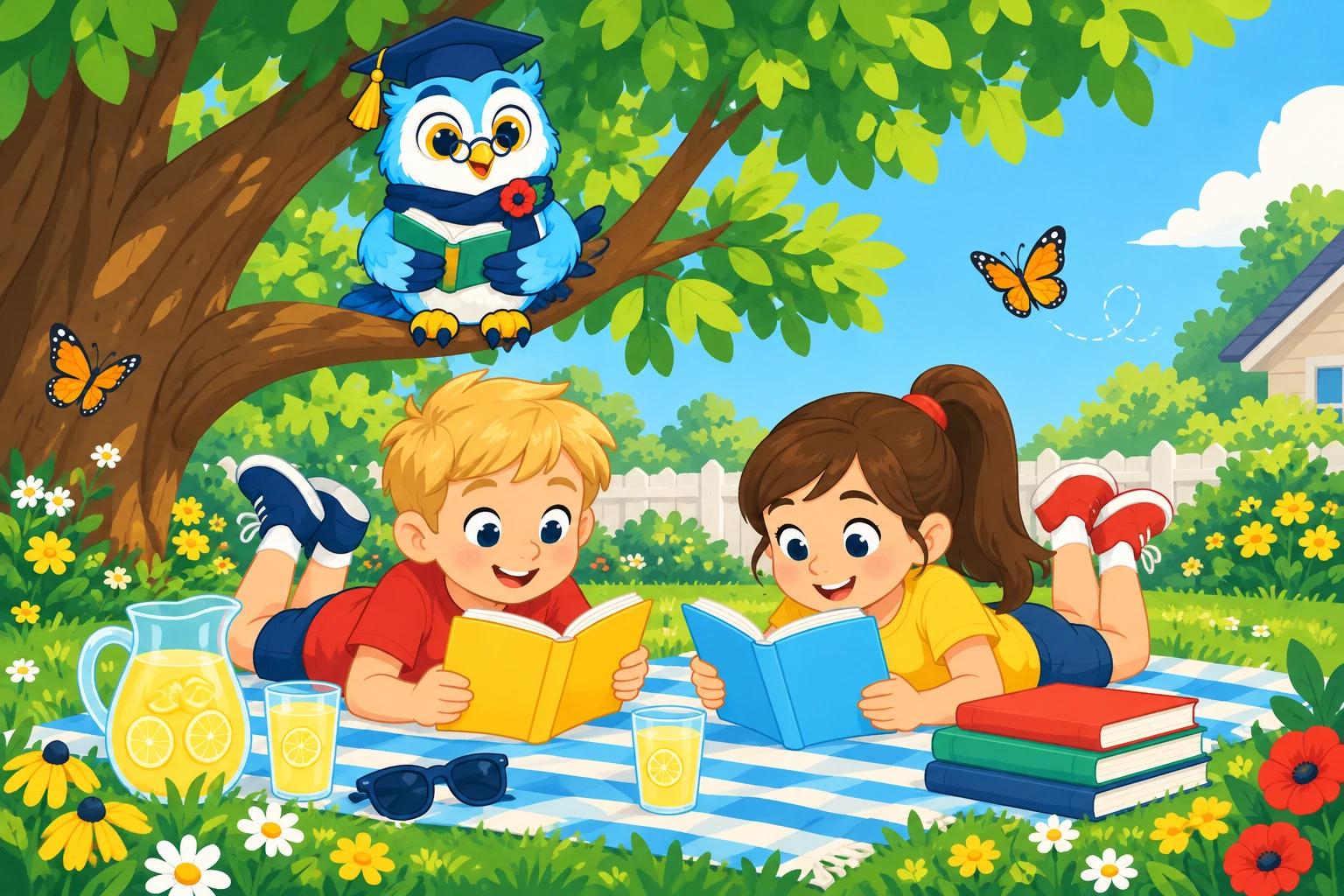
The last bell rings, the backpacks hit the floor and summer stretches out like one long, lazy Saturday. Then, somewhere around mid-July, you notice the books haven't moved from the shelf in weeks. By the time fall comes, the reading that felt easy in June suddenly feels like hard work again.
That dip has a name: the summer reading slide. The good news is that beating the summer reading slide doesn't take worksheets or a strict schedule. It takes a few small, fun daily habits that make reading part of summer itself, not a chore that interrupts it. This post shows you how.
At a glance
- Kids can lose reading ground over a long summer break, and the losses can add up year after year.
- Daily reading habits matter more than long, occasional sessions.
- Letting kids choose their own books is one of the most effective summer strategies.
- Tie reading to summer fun: picnics, road trips, campouts and library visits.
Why it matters
Summer learning loss is one of the most studied topics in education. A well-known review of decades of research on summer vacation, published in 1996, found that on average students' test scores were about a month of learning lower at the end of summer than at the start. In reading, family income made the biggest difference: children from middle-income homes often held steady or even gained a little over the summer, while children from lower-income homes tended to slip.
Researchers at the RAND Corporation, a non-profit research organization, have reported that these summer losses can build up over the years, so a small dip each summer can grow into a much bigger gap by middle school.
What helps? Books in hands, chosen by kids. In a three-year study in Florida schools, published in 2010, children from low-income families picked out their own books to keep at the end of each school year, with no reports or quizzes attached. Their reading scores grew more than those of similar children who didn't get books, and the researchers said the benefit was comparable to attending summer school.
7 daily habits to beat the summer reading slide
1. Anchor reading to something that already happens
Habits stick best when they ride along with an existing routine. Instead of setting a new "reading time," attach reading to something your child already does every day, like breakfast, the afternoon rest after the pool or the last 15 minutes before lights-out.
Try this: Choose one daily "book moment" and keep it the same all summer. Breakfast books, anyone?
2. Let your child choose, nearly always
Summer is the perfect season for free choice. Comics, joke books, fact books, graphic novels and rereading old favorites all count. When kids pick what they read, they read more, and more reading is the whole point.
Try this: Give your child a "summer stack" shelf or basket that's entirely theirs to fill.
3. Make the library a weekly adventure
Libraries are free, full of new books and often run summer reading programs with small prizes. A weekly visit keeps a fresh supply flowing, which matters because a child who runs out of interesting books stops reading.
Try this: Pick a regular library day and let your child bring home a mix: one easy read, one interesting challenge and one total wild card.
Professor Poppy's tip: Get your child their own library card if they don't have one. Kids treat it like a key to a treasure room, because it is one.
4. Read in summer places
Reading feels different on a picnic blanket, in a backyard tent or in the car on the way to the beach. Linking books with fun summer spots helps kids see reading as part of the good stuff, not a break from it.

Try this: Host a "flashlight reading night" in a backyard tent or a blanket fort, with a snack and a stack of books.
5. Keep reading aloud together
Summer is a great time to read a longer book aloud as a family, one chapter at a time. Your child hears rich vocabulary and expressive reading, and gets to enjoy a story that's above their own reading level. Taking turns with the pages adds practice for them too.
Try this: Choose a summer read-aloud the whole family votes on, and save it for one cozy time each day.
6. Sneak reading into everyday life
Reading doesn't only happen in books. Recipes, maps, game instructions, menus, signs and postcards are real reading with a real purpose, and kids practice without noticing.
Try this: Make your child the "trip reader" who reads the road signs, the trail map or the museum signs on family outings.
7. Track it in a fun way
A simple visual tracker gives kids a sense of progress and something to be proud of. Keep it light and celebrate effort, not speed. The goal is a habit, not a race.
Try this: Draw a summer "reading road" on a long sheet of paper. Your child colors one stepping stone for every day they read, and you plan a small celebration at the end of the road.
Age by age
| Age | What it looks like | How to help |
|---|---|---|
| 5 to 6 | Building early skills like letter sounds and sight words; reading short, simple books. | Read aloud every day, reread favorite picture books, and play rhyming and sound games. |
| 7 to 8 | Reading short stories and early chapter books; growing smoother and more confident. | Keep a daily book moment, let them choose, and take turns reading pages aloud. |
| 9 to 10 | Reading chapter books and nonfiction independently; may drift toward screens. | Keep a fresh library supply, try series and topic books, and connect reading to their hobbies. |
| 11 to 12 | Capable of long books but often busy with camps, sports and friends. | Offer audiobooks for travel, family book chats and plenty of free choice. |
Try it tonight: the Summer Reading Bingo Card
Time: about 15 minutes. You'll need: a sheet of paper, a ruler, markers and some stickers if you have them.
- Draw a grid of squares, three across and three down.
- Fill each square with a fun reading challenge, such as "read outside," "read to a pet or stuffed animal," "read a joke book," "read in the car" or "read with a flashlight."
- Your child marks a square each time they complete a challenge.
- A full row earns a small treat, like choosing the next family movie or a trip for ice cream.
Bingo makes variety the goal, which quietly nudges kids toward new kinds of reading. Our free reading games make a great rainy-day bonus, too.
Professor Poppy's tip: Ten happy minutes a day beats a two-hour battle once a week. Protect the habit and the minutes will grow on their own.
Books that help
Short, satisfying stories are perfect for summer, because a child can finish one in a single sitting and feel proud.
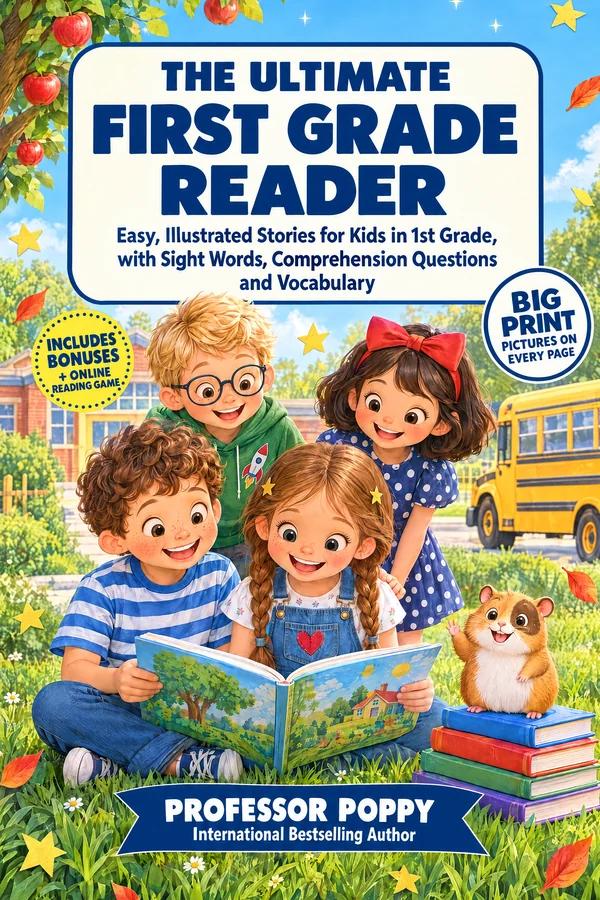
- The Ultimate First Grade Reader has big print, short sentences and a picture on every page, so new readers keep their skills fresh over the break.
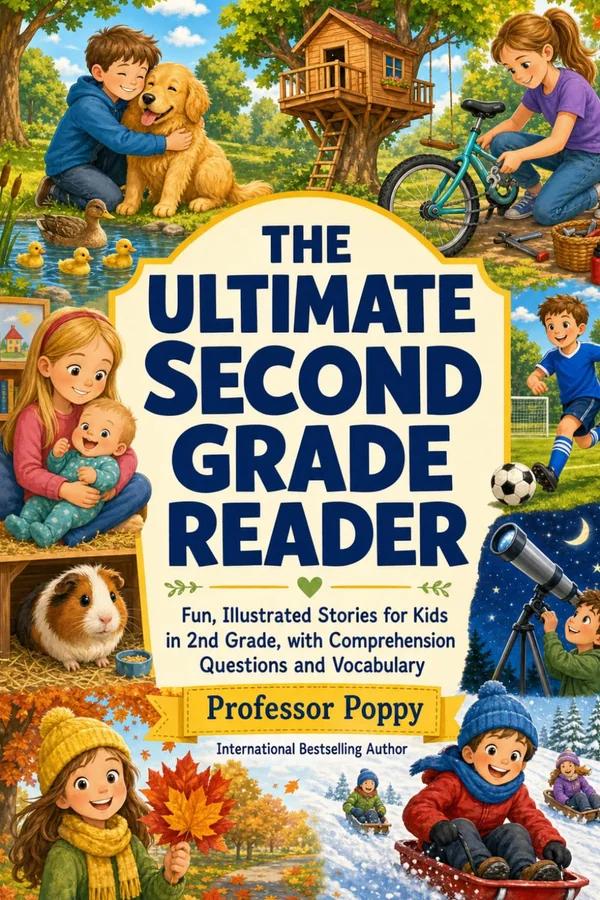
- The Ultimate Second Grade Reader offers warm, everyday adventures written at a true second grade level, each sized for a single sitting.
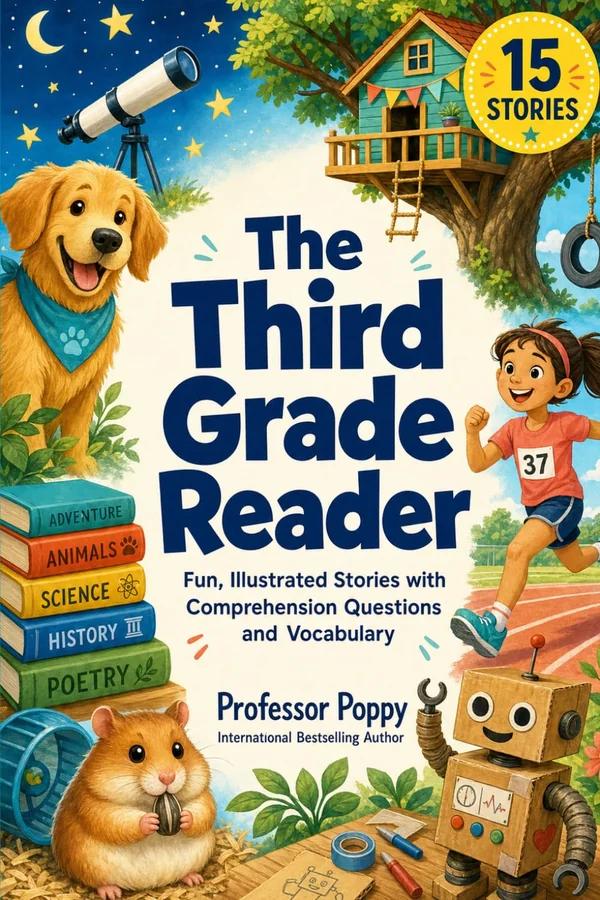
- The Third Grade Reader bridges the gap to chapter books with illustrated stories and a Think It Through page after each one.
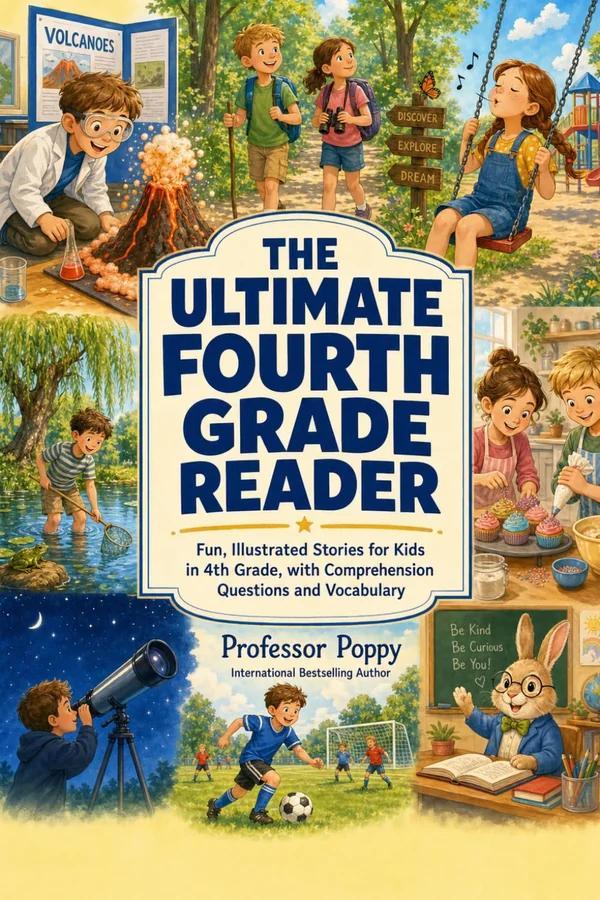
- The Ultimate Fourth Grade Reader follows a class of friends through funny, warm stories with comprehension questions that keep thinking skills sharp.
If your child is heading into third grade, our guide on how to help a 3rd grader read better has more ideas for the year ahead.
Quick answers
What is the summer reading slide?
It's the drop in reading skills some children experience over a long summer break when they read less than during the school year. It's common, and it's very preventable with regular, enjoyable reading.
How much should my child read over the summer?
There's no magic number, but a little reading every day works better than occasional long sessions. Many families aim for about 15 to 30 minutes a day, adjusted for age and attention span. Following your child's interests matters more than the clock.
Do audiobooks count as summer reading?
Audiobooks build vocabulary, listening comprehension and a love of stories, so they're a great addition, especially in the car. Pair them with some print reading so your child also keeps practicing decoding words on the page.
Sources
- American Educational Research Association, Review of Educational Research (1996): The Effects of Summer Vacation on Achievement Test Scores
- RAND Corporation: Making Summer Count, How Summer Programs Can Boost Children's Learning
- University of Tennessee researchers, Reading Psychology (2010): Addressing Summer Reading Setback Among Economically Disadvantaged Elementary Students