Learning at home
How to Teach Kids About the Human Body in Fun Ways
How to teach kids about the human body in fun, age-right ways, from naming body parts to feeling a heartbeat, with easy activities by age.
The Professor Poppy team · October 9, 2026 · 7 min read
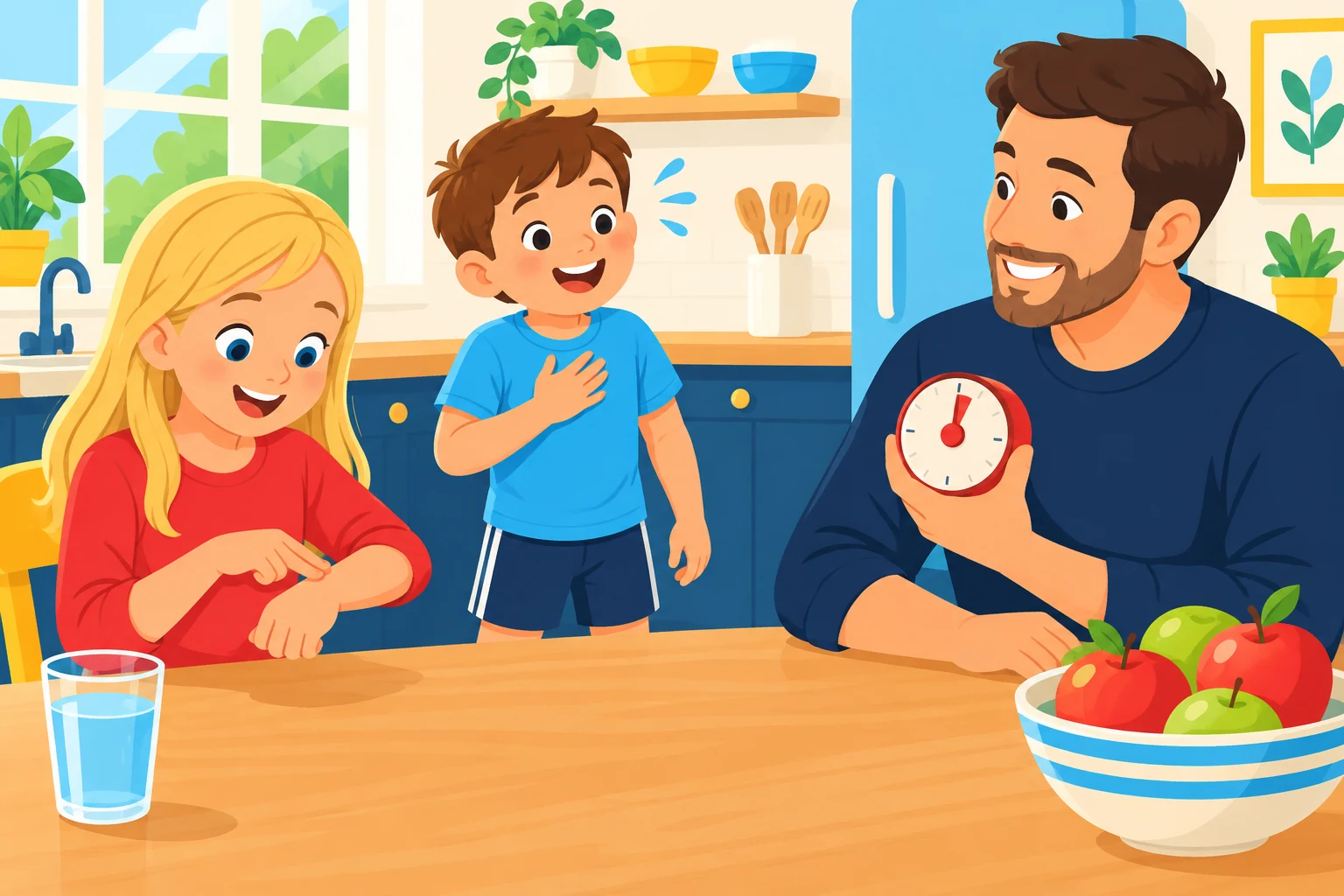
"Where does my sandwich go?" It's an innocent question at lunch, and suddenly you're explaining the stomach while your child pokes their own belly looking for it. Then come the follow-ups: Why do I hiccup? Why is blood red? Why do I have to sleep?
Kids are fascinated by their own bodies, and that makes the human body one of the easiest science topics to teach at home. This guide shows how to teach kids about the human body in fun, age-right ways: what to share at each stage, simple experiments that use nothing but your own two hands, and how to keep the conversation easy and comfortable.
At a glance
- Children start learning about their bodies as toddlers, by naming and pointing to body parts.
- Hands-on discoveries, like feeling a heartbeat, stick far better than diagrams alone.
- Match the detail to the age: simple names and jobs first, body systems later.
- Using correct names for every body part helps kids stay healthy and safe.
Why it matters
Learning about the body starts earlier than many parents expect. The Centers for Disease Control and Prevention lists pointing to at least two body parts when asked as one of the language milestones most children reach by age two. From there, curiosity only grows.
Body science is also packed with the kind of surprises kids love. According to anatomy experts at Case Western Reserve University, babies are born with about 300 bones, while most adults have 206. Bones don't disappear. Many small bones slowly join together as children grow. Tell a seven-year-old that they once had more bones than their parents and watch their eyes go wide.
There's a practical side, too. Kids who understand how their bodies work are better able to describe how they feel, which helps when they're sick or hurt. Pediatricians at the American Academy of Pediatrics also encourage parents to teach the correct names for all body parts, including private parts, so children can talk clearly and confidently about their bodies.
7 ways to teach kids how their bodies work
1. Start with names and jobs
Before kids can understand blood cells, they can learn that the heart pumps, the lungs breathe and the stomach mashes food. Simple "name plus job" pairs give young children a map of their bodies that later lessons build on. Use the real names for every body part from the start, in the same matter-of-fact voice.
Try this: Play "Body Part Simon Says": "Simon says touch your elbow! Simon says point to the part that helps you smell!"
2. Let them feel it working
The best body lessons happen inside your child's own body. Feeling a heartbeat speed up, watching their chest rise with each breath or noticing their pupils shrink in bright light turns a fact into an experience they'll remember.
Try this: Have your child place a hand on their chest while sitting still, then do 20 jumping jacks and feel again. Ask, "Why do you think your heart sped up?"
3. Use everyday comparisons
Abstract ideas click when they're tied to something kids already know. The heart is a pump about the size of your fist. Muscles in the digestive system push food along in waves, a bit like squeezing a tube of toothpaste. Bones are a frame, like the beams that hold up a house.
Try this: At dinner, ask your child to invent a comparison of their own: "My lungs are like..." The sillier the better, as long as it explains the job.
4. Follow the questions they already ask
Kids hand you the lesson plan every day. A scraped knee is a chance to talk about how skin heals. A sneeze opens up germs and how the body fights them. Hiccups, goosebumps and growling tummies are all doorways into body science.
Try this: Keep a "Body Questions" list on the fridge. When a question pops up that you can't answer, write it down and look it up together later.
Professor Poppy's tip: "I don't know, let's find out" is one of the best things a grown-up can say. It shows kids that learning never stops, even for parents.
5. Make it silly
Body science comes with a built-in giggle factor: burps, sneezes, stinky feet and growling tummies. Lean into it. Kids who are laughing are listening, and silly questions often lead to surprisingly serious science, like why our stomachs make noise or why sweat smells.
Try this: Play "Would You Rather, Body Edition": "Would you rather have super-strong bones or a super-fast brain?" Then talk about what each part really does.
6. Build a life-size body
A paper body outline is one of the most memorable body activities you can do at home. Kids see where organs sit, how big they are compared to each other, and how everything fits together inside them.
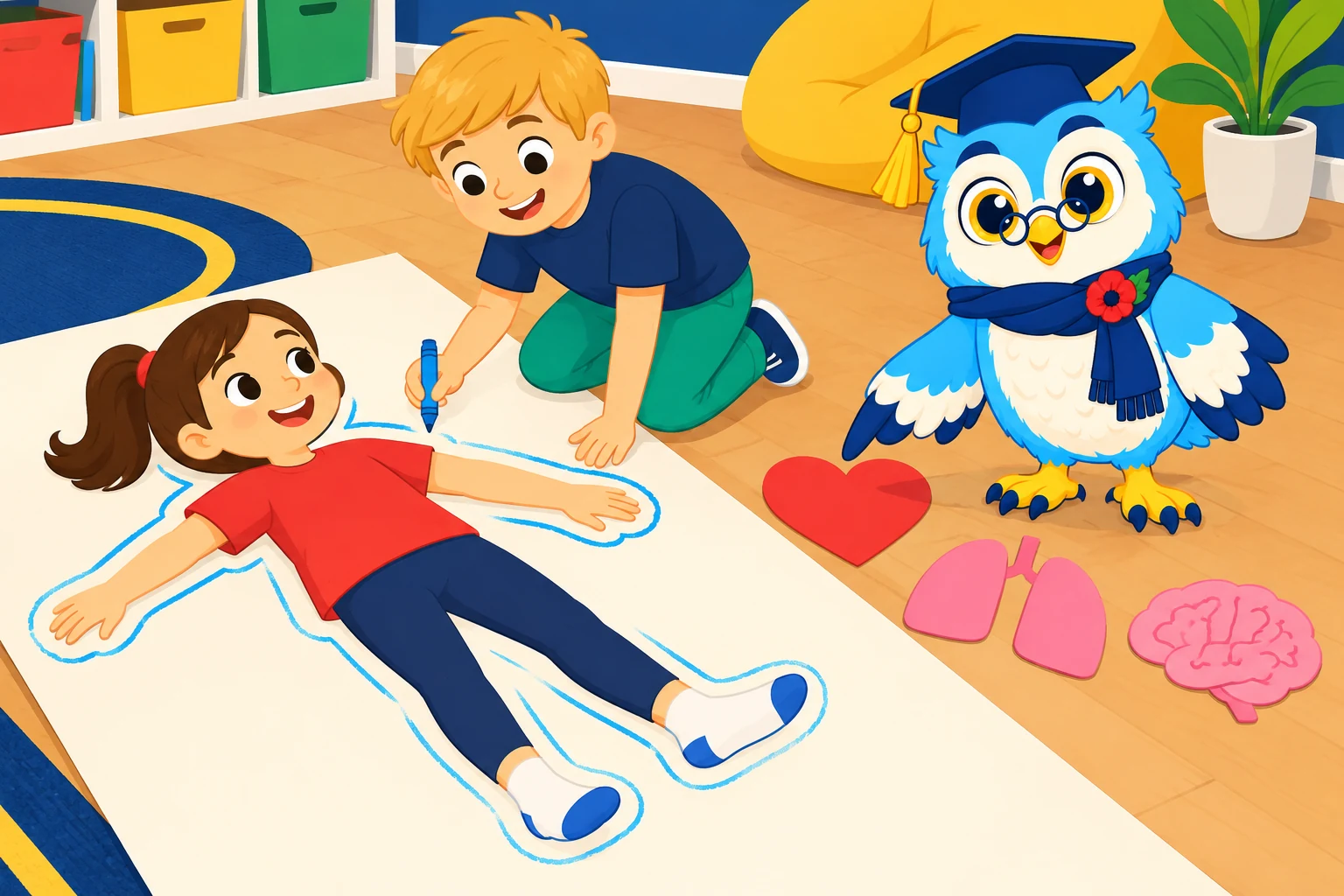
Try this: Roll out a long sheet of paper, trace around your child, then cut out simple paper organs (heart, lungs, stomach, brain) and place them where they belong.
7. Connect the body to healthy habits
When kids understand why their bodies need sleep, water, healthy food and exercise, those habits stop feeling like rules and start making sense. A child who knows that muscles grow stronger with use is more excited to run, climb and play.
Try this: Next time your child asks for a glass of water, ask them where they think it goes, then explain that the body uses water in every single cell.
Age by age
| Age | What it looks like | How to help |
|---|---|---|
| 2 to 3 | Names and points to body parts, loves songs about heads, shoulders, knees and toes. | Name body parts during bath time and dressing, using the correct words for every part. |
| 4 to 5 | Curious about what's inside: bones, blood, "where food goes." Loves simple experiments. | Feel heartbeats and breathing, look at bones in X-ray pictures, and keep answers short and true. |
| 6 to 8 | Ready to learn what major organs do and how they work together. Loves gross facts. | Build a paper body, play body games and connect body facts to healthy habits. |
| 9 to 12 | Ready for body systems, how germs spread, and how the body changes as kids grow. | Explore detailed diagrams, try simple experiments and answer questions about growing up honestly. |
Try it tonight: the heartbeat detective
Time: about 15 minutes. You'll need: a clock or timer with a seconds hand or display, paper and a pencil.
- Show your child how to find their pulse: place two fingers (the pointer and middle finger) gently on the inside of the opposite wrist, just below the thumb.
- Count the beats for 30 seconds, then double the number together. That's beats per minute. For children ages 7 to 9, a normal resting heart rate is about 70 to 110 beats per minute, according to the National Library of Medicine.
- Now everyone does one minute of jumping jacks, running in place or dancing. Count again. What happened?
- Sit quietly for three minutes, then count once more. Make a little chart of all three numbers and talk about why the heart speeds up during exercise: your muscles need more oxygen, so your heart pumps faster to deliver it.
Want more play-based learning? Try our free games, or see our guide to answering kids' why questions.
Books that help
- PoppyPedia: The Big Book of How Your Body Works takes kids through bones, blood, breathing, digestion, the brain and more with bold, labeled diagrams and Try This At Home ideas.
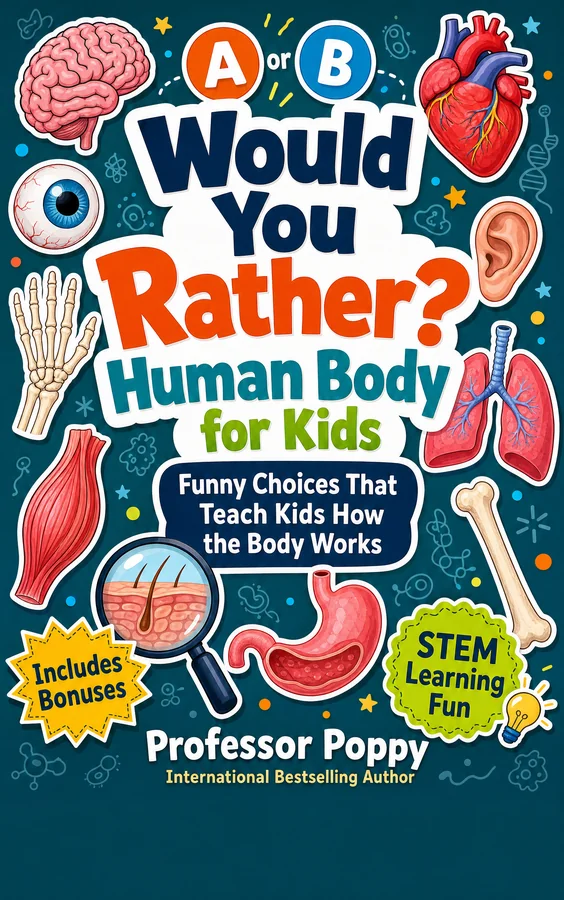
- Would You Rather? Human Body for Kids mixes funny choices with real body science, so hiccups, germs and brains become laugh-out-loud dinner table debates.
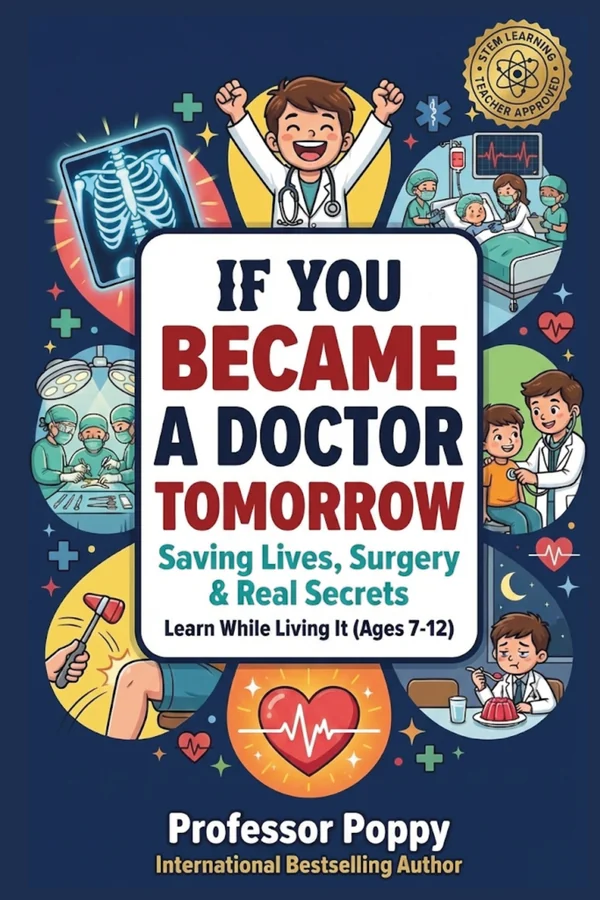
- If You Became a Doctor Tomorrow lets kids solve real-feeling medical cases and learn how the body works by "treating patients."
Quick answers
At what age should kids learn about the human body?
Right from the start. Toddlers learn body part names, and by preschool most children are curious about what's inside. Keep the details simple for little ones and add more as their questions grow.
How do I explain organs to a young child?
Give each organ one simple job and one everyday comparison. "Your heart is a pump that pushes blood all around your body, like a water pump." Then let them feel it working, by finding their heartbeat or taking deep breaths.
Should I use the real names for private body parts?
Yes. The American Academy of Pediatrics encourages parents to use correct names for all body parts. It helps children describe pain or problems clearly to a parent or doctor, and it shows them that no part of their body is too embarrassing to talk about with a trusted grown-up.
Sources
- Centers for Disease Control and Prevention: Important Milestones, Your Child by Two Years
- Case Western Reserve University: why babies have more bones than adults
- National Library of Medicine (MedlinePlus): Pulse
- National Institute of Diabetes and Digestive and Kidney Diseases: Your Digestive System and How It Works
- American Academy of Pediatrics: guidance for parents on teaching body part names