Life skills
Teaching Kids About Money by Age: Save, Spend, Share
Teaching kids about money by age, from first coins to teen budgets. Simple save, spend and share habits that build smart money skills for life.
The Professor Poppy team · October 9, 2026 · 7 min read
You're in the checkout line when it starts. "Can I have it? Pleeease?" You say no, and your child replies with total confidence: "Just use your card. Then it's free!" It's funny, and it's also a perfect snapshot of how kids see money when nobody has explained it yet: invisible, endless and a little bit magic.
The good news is that teaching kids about money by age doesn't need spreadsheets or big lectures. It works best as small, everyday moments that grow with your child. This guide shows what kids can handle at each stage, and how to build three simple habits that last a lifetime: saving, spending wisely and sharing.
At a glance
- Money habits start forming early, long before kids earn their first paycheck.
- Three simple buckets, save, spend and share, make money visible and concrete.
- Let kids make small money choices, and small mistakes, while the stakes are low.
- Talk out loud about your own everyday money decisions so kids hear how it's done.
Why it matters
Kids pick up money lessons whether we teach them or not. The Consumer Financial Protection Bureau, a U.S. government agency, describes three building blocks of lifelong money skills: thinking skills like planning ahead and self-control, everyday money habits and attitudes, and money knowledge for making decisions. Its research notes that between ages 3 and 5, basic values and attitudes about money begin to form, and between ages 6 and 12, money habits really start to take shape.
A study by researchers at the University of Cambridge, commissioned by a UK government-backed money guidance service, reached a similar conclusion: many core money habits are already taking shape by around age 7. That doesn't mean it's ever too late. It does mean the elementary years are a wonderful window for simple, hands-on practice.
7 ways to teach kids about money
1. Make money visible
Cards and phones make money disappear from view. Young children understand what they can see and touch, so use real coins and bills when you can. Counting, sorting and trading coins builds number sense too.
Try this: Next time you shop for a small treat, let your child hand over the cash and count the change with you.
2. Use three jars: save, spend and share
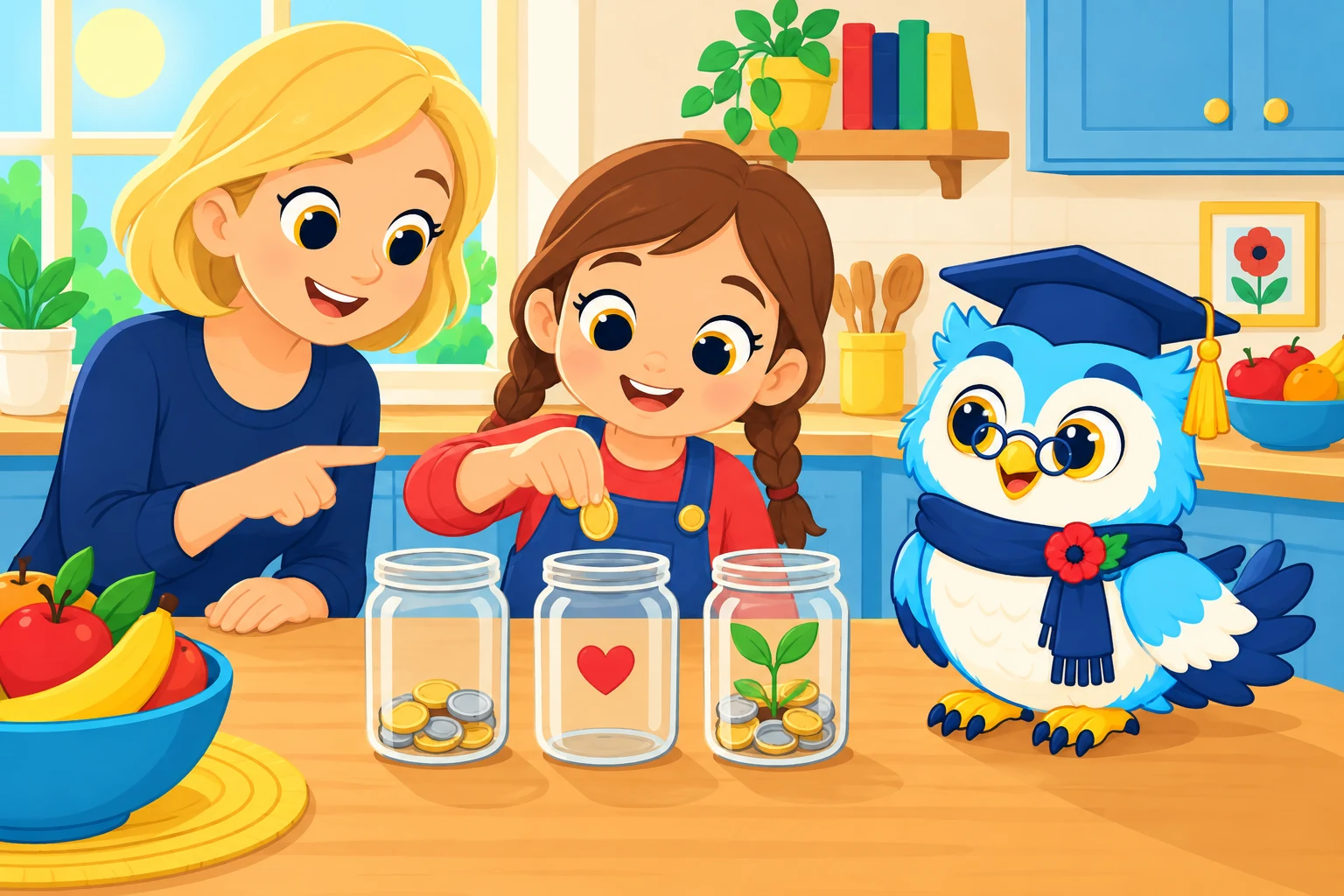
Clear jars let kids watch their money grow and make choices concrete. When money comes in, from a birthday card or a small allowance, your child divides it between the jars. Many families start with an even split, then adjust as kids get older.
Try this: Let your child decorate three jars with a drawing on each: a piggy for save, a shopping bag for spend and a heart for share.
3. Set a saving goal they can see
Saving is hard because "later" feels far away. A clear goal with a picture makes waiting feel worth it. Start with something reachable in a few weeks, then stretch toward bigger goals as patience grows.
Try this: Tape a picture of the goal to the save jar and draw a "thermometer" next to it. Color it in as the jar fills.
Professor Poppy's tip: When your child finally buys the thing they saved for, celebrate the waiting, not just the buying. "You did that. You planned it and you stuck with it."
4. Let them make spending choices
Kids learn to spend wisely by actually spending. Give your child a small, fixed amount for an outing and let them decide. If the toy breaks the next day or the candy is gone in five minutes, that's a cheap, gentle lesson they'll remember far longer than a warning.
Try this: Before buying, ask two questions together: "Is this a need or a want?" and "Would I still want it tomorrow?"
5. Turn the grocery store into a classroom
The store is full of real-life math and decision-making. Comparing two sizes of the same item, sticking to a list and spotting a better deal are exactly the kinds of choices adults make every week.
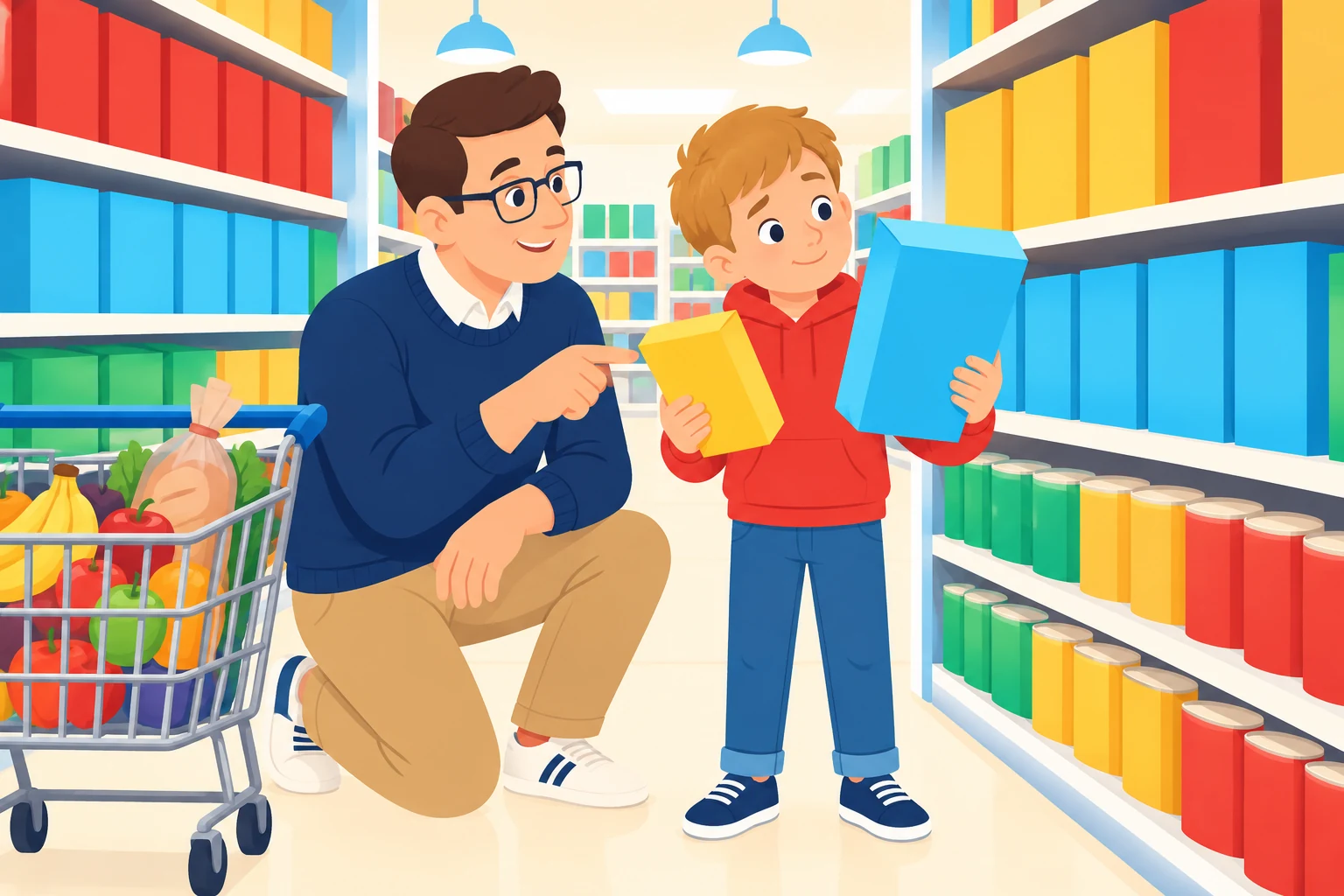
Try this: Give your child a small budget and one item to choose for the family meal, such as a fruit or a snack. Their job is to pick the best choice that fits.
6. Make sharing part of the plan
Sharing teaches kids that money can help others and the world around them. Let your child choose where their share jar goes: an animal shelter, a food drive, a classmate's fundraiser or a gift for someone special. Choosing it themselves makes it meaningful.
Try this: Once a season, sit down together, count the share jar and decide where it will do the most good.
7. Talk out loud about your money choices
Children copy what they see, and most adult money decisions happen silently. Narrating your thinking helps them see the planning behind everyday life.
Try this: Think aloud now and then: "We're eating at home tonight because we're saving for our summer trip," or "I'm waiting for this to go on sale."
Age by age
| Age | What it looks like | How to help |
|---|---|---|
| 3 to 5 | Knows money buys things, starts to recognize coins, finds waiting very hard. | Play store at home, count coins together and practice waiting a few minutes for small treats. |
| 6 to 8 | Counts money, understands saving for a goal, starts comparing prices. | Start the save, spend and share jars, set short saving goals and let them pay at the store. |
| 9 to 12 | Can plan ahead, handle a small regular allowance and compare value. | Hand over a weekly amount with clear rules, let them budget for outings, and discuss needs and wants. |
| 13 and up | Ready for bigger goals, earning money and real-world tools. | Introduce a savings account, a simple budget and the basics of earning, with plenty of check-ins. |
Try it tonight: the Living Room Store
Time: about 15 minutes. You'll need: a handful of real coins, sticky notes, a pen and a few household items like a toy, a snack and a book.
- Put a price on each item with a sticky note, such as 10 cents for a sticker or 25 cents for a snack.
- Give your child a small pile of coins to spend.
- Let them shop, count out the coins and decide what they can afford.
- Swap roles: now you're the shopper and they're the shopkeeper who gives change.
Afterward, ask, "What did you choose not to buy, and why?" That one question is the heart of budgeting. For more everyday skills by age, see our guide to life skills for kids.
Professor Poppy's tip: Keep money talks short and calm. Five relaxed minutes at the kitchen table teach more than one long lecture.
Books that help
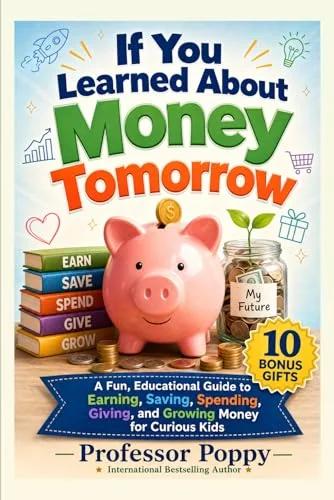
- If You Learned About Money Tomorrow shows curious kids how to earn, save, spend wisely, give generously and help money grow, with friendly illustrations that make big ideas click.
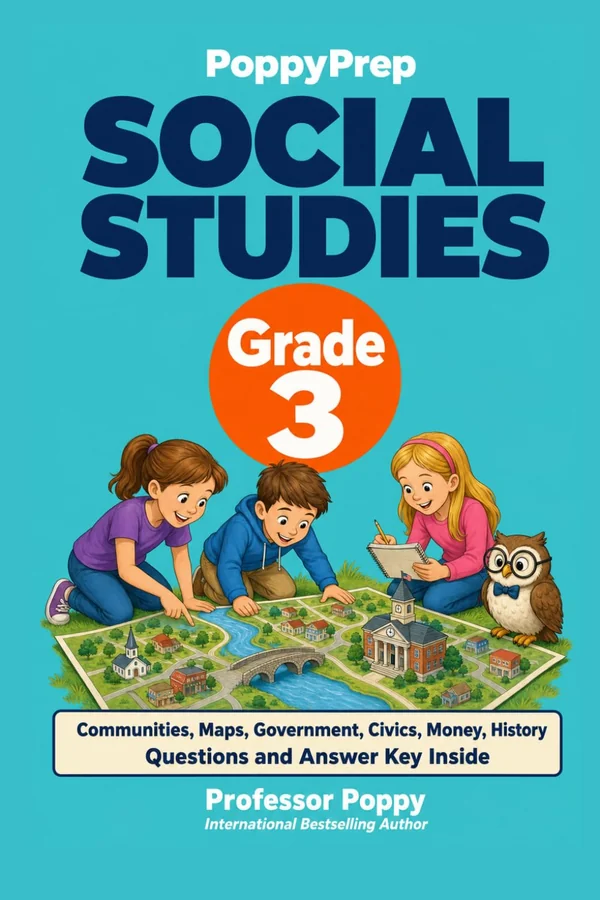
- PoppyPrep Social Studies for Grade 3 includes short reads on money and communities, with questions that get third graders thinking about how money works in the real world.
- Life Skills Guide for Teen Boys gives teens picture-led, step-by-step help with managing money, plus cooking, fixing things and landing a job.
Quick answers
At what age should you start teaching kids about money?
You can start in the preschool years with simple ideas like counting coins, playing store and waiting for a treat. Government research suggests money attitudes begin forming between ages 3 and 5, so early, playful lessons make a real difference.
Should kids get an allowance?
It's a family decision, and there's no single right answer. A small, regular allowance gives kids real practice making choices, saving and sometimes regretting a purchase. Some families tie part of it to extra jobs, while everyday chores stay part of family life.
How do I teach my child the difference between needs and wants?
Use everyday moments. At the store, ask whether an item is something the family must have, like food or shoes, or something that would be nice, like a toy. Over time, kids start asking themselves the same question before they spend.
Sources
- Consumer Financial Protection Bureau: Building Blocks to Help Youth Achieve Financial Capability
- Consumer Financial Protection Bureau: Money as You Grow
- University of Cambridge: Habit Formation and Learning in Young Children (2013)